Needless of a proof!

What’s a moment when a stranger completely restored your faith in people?

Proof may not be necessary for faith, but that doesn’t make evidence useless.

We don’t need evidence to believe in God, but humanity will be restored with a small deed of kindness!

Strong trust or unwavering belief in someone or something, frequently without the need for evidence, can be characterised as faith. It can entail having faith in God or a particular religion, having faith in someone, etc. I could only relate to the latter, not the former, in terms of my forty years on this earth and my life experiences! However, life frequently depicts humanity in its best form, regardless of the negative experiences one has with loved ones and those we cherish. I think there are still good people in the world.
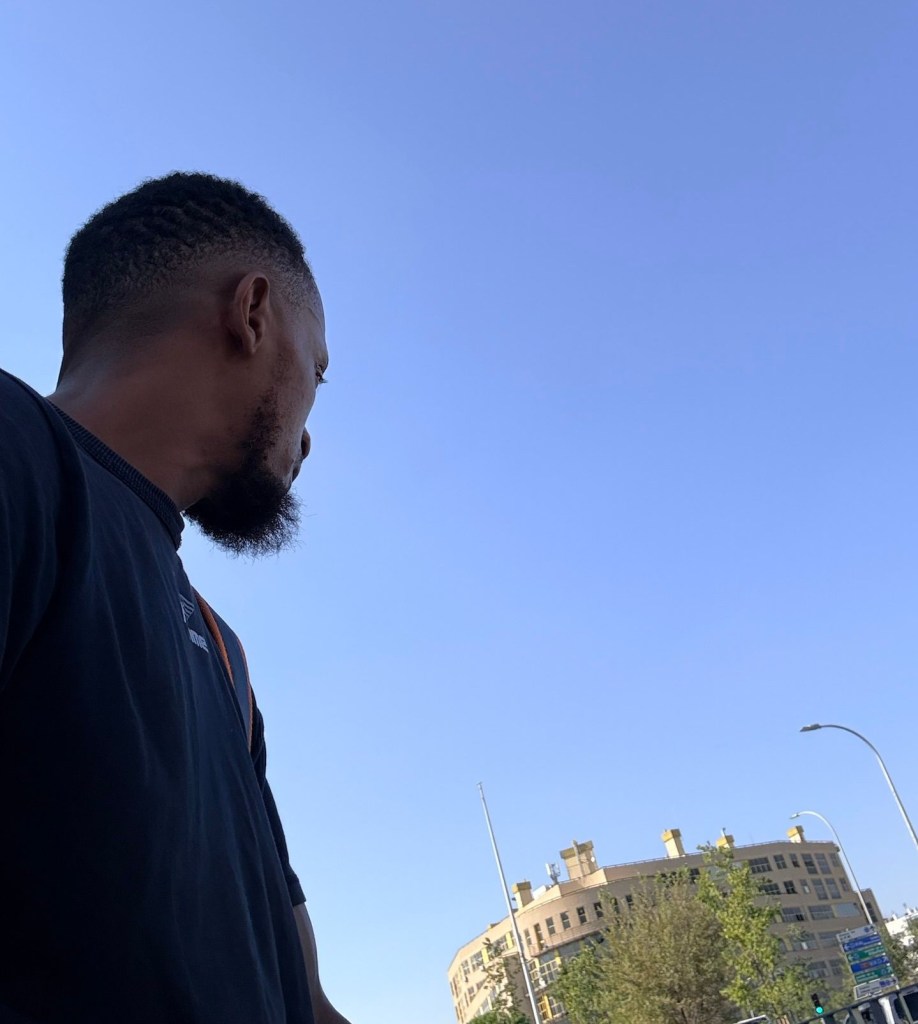
On the kindness pathway …

It was rush hour on my way to work this evening, and the train station was crowded with passengers boarding and deboarding at every stop. My journey took more than an hour; to avoid being late, I’d rather arrive an hour earlier. However, as the train came to a halt at our second stop, people rushed to board in order to secure a seat. I noticed someone on their knees, struggling to get in, as people of all ages passed by. I was eager to capture what it was until a passenger ran toward the door and helped an elderly woman in her mid-80s get into the train and sit down. I was moved by the male passenger’s gestures toward the woman he had never met before.

Little things in life make a big difference if we can all be compassionate.

Nonetheless, I was stranded on my way home from work earlier this year because I had run out of bus tickets; in other words, I had to buy a 3€ ticket in order to get home, which is an hour’s fast drive from my station. I only discovered my card wasn’t working when I tried to clock in. Tired, stranded, and stressed 

After working for eight hours straight, all I wanted to do was go home and rest. I tried explaining to the driver for consideration but was unsuccessful, and it was 4:30 a.m. As I was about to leave the bus, a male passenger approached me and offered to pay for my ticket. I was overjoyed at his kindness and mercy toward me. A stranger watching out for another stranger (me). On rare occasions, strangers’ acts of kindness have restored my faith in humanity through small gestures that melt my heart more than gold and silver. Proof may not be necessary for faith, but a little act of kindness is pathway to restore faith in humanity .
Knowledge unused is still power stored.

Who was your most influential teacher? Why?

What you learn today may save you tomorrow.

Life teaches us things both directly and indirectly, and it is our responsibility to apply the knowledge we have learned at the time to the situation or individual.

A teacher, also known as an educator, is a professional who works in educational settings to create and carry out instructional strategies in order to assist students in gaining knowledge, competence, or virtue. They are essential for promoting learning and intellectual development. Early childhood, elementary, and secondary education are just a few of the levels at which teachers can work. However, learning is an ongoing process that is not exclusive to humans and continues until the end of life.

It was fascinating to grow up; I wanted something special as a kid. I was bold, inquisitive, and willing to learn, but even though I prioritized learning, life has hidden agendas.

However, a teacher in my early secondary school years stood out not because of his subject (introtech), which is primarily drawing and cannot be compared to other subjects like English, and literature,which I preferred and paid more attention in my early secondary years.

which contributed towards my ability to write this piece for you today.

We all learn and understand differently but some teachings can only be understood uniformly. Every teacher has a different method of imparting knowledge, and it is our responsibility to interpret meaning in order to comprehend it.

*Better have it and not need it!*

The most fascinating aspect of education is that, when properly assimilated, it greatly influences our future, knowledge, and way of thinking. Furthermore, it is not limited by time; depending on the situation surrounding its application, it may be used and requested decades after it was acquired or right away.

My introtech teacher, an elderly man in his late 60s who frequently deviates from his subjects to offer advice in parables, speaks calmly and directly to his students. He always guided his students, to understand that the future is partially, if not entirely, funded mentally by current behaviors, and that long-term goals are preferable to short-term rewards.

However, not every student in my class liked him, as many made caricatures of his advice, but as someone who was raised in a home with similar words and a strong curiosity, I also believe in his teaching and ideas.

One day, he demanded quiet in his class because some students were making too much noise. He said. * Listen to what I say; I am older and more experienced. My advice is intended for your own good. You may not get this kind of advice from your parents or anyone else in your life, which is why you should listen when I speak; no knowledge is a waste. *It is preferable to have knowledge of something and not need it than to need a knowledge and not have it. What you learn today may save you tomorrow.*

Decades after his death, I can still hear what he said. My introtech teacher’s remarks contributed to my understanding of the importance of education, even though my parents had a bigger and more profound influence on my knowledge and intelligence.