Lesson I learned the hard way!

What’s one thing you know now that would have saved your younger self a lot of pain?

A Good Heart Needs Boundaries

Had I known then what I know now, perhaps I would have saved myself years of unnecessary pain. Perhaps I would have made different decisions, trusted different people, and learned to walk away from situations I once fought so hard to preserve.

But life rarely gives us the wisdom before the experience. Sometimes, we must live through the lessons before we can understand them.

I had just finished dinner and packed my books into my backpack. My scheduled study time hadn’t gone as planned, and it was already past nine in the evening.

The day had been busy. I had gone to the gym, returned home to cook, made calls to old friends, visited a friend, done my laundry, and tried to squeeze in some writing between my chores. Unfortunately, the writing hadn’t happened.

This night, I decided to have muesli with carrots, peanuts, and sunflower seeds—one of my all-time favourites.

After eating, I carried my backpack from the dining room to my bedroom. I sat on my bed with my phone in my hand and began scrolling through social media.

I hadn’t published an article for several days. I knew some of my readers might be waiting for another story because I regularly checked my blog statistics. Each time I saw people visiting my website, I reminded myself that I had a responsibility to keep writing and, hopefully, to give them something worthwhile to read.

As I scrolled through the prompts, one question caught my attention:

What is one thing you know now that would have saved your younger self a lot of pain?

I immediately felt that one thing wasn’t enough.

Why should I limit myself to one lesson when life had taught me so many?

Perhaps the better question is: 

What are the things you know now that you wish you had understood earlier?

This is my attempt to answer that question—not to dwell on the past, but to share what it has taught me.

Life Is a Continuous Lesson

Life is a continuous process shaped by circumstances, decisions, mistakes, and repetition. Some lessons come gently, through observation and advice. Others arrive through painful experiences we would never willingly choose. The unfortunate truth is that some decisions can only be made once, yet their consequences may follow us for years.

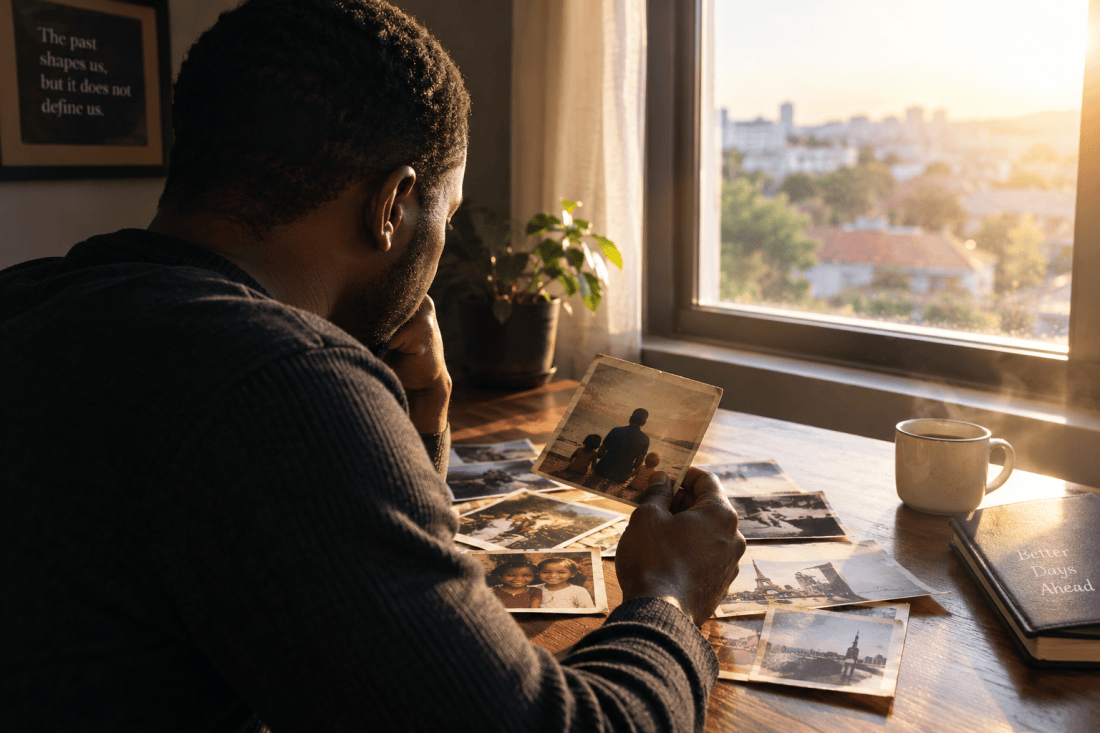
I prefer my writing to inspire and uplift rather than leave people feeling dark and depressed. However, sometimes we must acknowledge the painful parts of life before we can fully appreciate the beautiful ones.And so, I continued scrolling through my Instagram pictures, looking at the life I had lived before now. I saw the rise and the fall, the trust and the betrayal, the crowds and the silence, the friends and the foes.

I remembered people who once claimed they could not live without me. I remembered those who came around because of what they could gain. I remembered the flatterers, the dishonest people, and those whose respect seemed to depend on my ability to solve their problems.

I remembered the times my good heart was mistaken for weakness, my patience was taken for granted, and my intentions were misunderstood. Most importantly, I remembered the people I had allowed into my life when I should have kept my distance.

The Lessons I Wish I Had Learned Earlier

One of the most important things I know now is that having a good heart does not mean giving everyone unrestricted access to it.
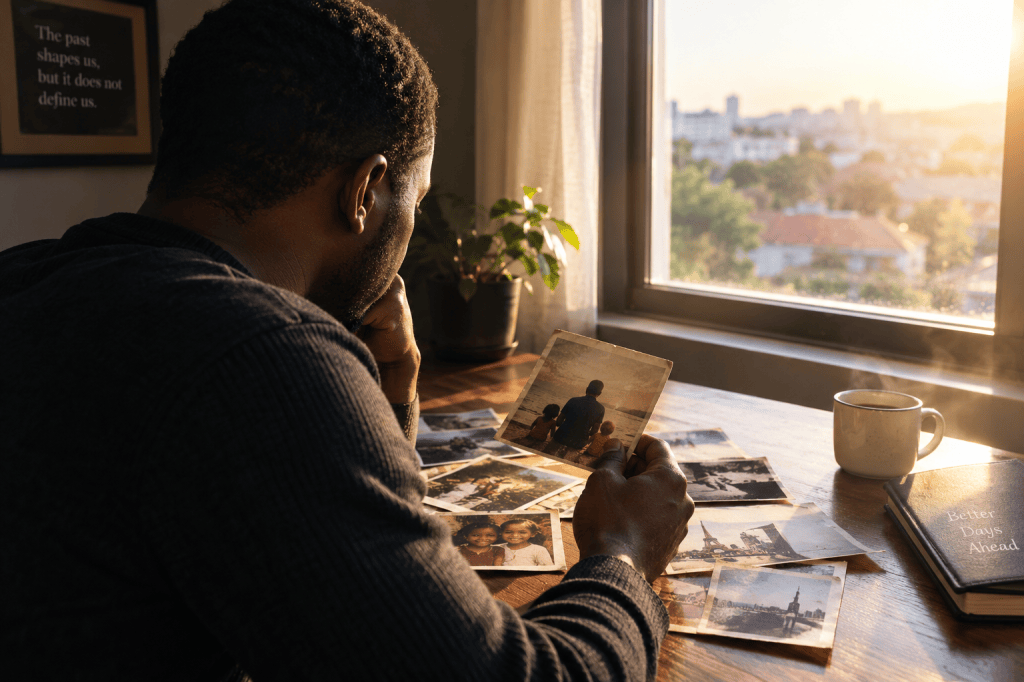
A good heart needs boundaries

I wish I had understood that helping people is a beautiful thing, but not everyone you help will appreciate your kindness. Some will remember what you did for them; others will remember only what you can do for them next.

I wish I had understood that not everyone who says they love you genuinely has your best interests at heart. Words can be comforting, but consistent actions reveal much more.

I wish I had learned that friendship is not measured by how many people surround you when life is good, but by the sincerity of those who remain when you have nothing to offer.

I wish I had understood that respect should not depend on my usefulness. I am still worthy of respect when I cannot solve someone’s problem, provide financial assistance, or offer something in return.

I wish I had been more patient with my journey towards success. Impatience can make us desperate for acceptance, recognition, and results. Sometimes, in our hurry to become something, we forget that becoming takes time.

And I wish I had understood the importance of boundaries.

There were people I would have helped differently, people I would have trusted more cautiously, and people I would have walked away from much earlier.

I would not have humbled myself so desperately before people who never considered me their equal. I would not have walked a thousand miles for those unwilling to walk a kilometre for me.

I would not have confused my good intentions with a guarantee of good outcomes.

Because the truth is simple: you can have pure intentions and still make poor decisions about the people you trust.

A good heart is a gift, but wisdom is what teaches you how to protect it.

Despite everything, I refuse to believe that helping people makes you foolish or that trusting someone automatically makes you weak. The world still needs kind people, honest friendships, generosity, and love.

What I have learned is that kindness needs boundaries, trust needs time, and love should not require you to abandon your self-respect.

You can forgive someone without inviting them back into your life. You can wish someone well without continuing to carry their burdens. You can remain a good person without making yourself available to everyone.

And you can learn from betrayal without allowing it to turn you into someone who betrays others.

I don’t want the people who hurt me to determine the kind of person I become.

If anything, I want my experiences to make me wiser, more patient, more discerning, and more intentional about the people I allow into my life.

That, to me, is a better form of growth.

Looking at those old pictures, I realised how quickly life can change. The person you were five years ago may have had different friends, different priorities, different dreams, and a completely different understanding of the world.

Some relationships end. Some dreams change. Some people disappoint you. And sometimes, you discover things about yourself that you wish you had understood earlier. But the past is not only a record of what went wrong. It is also evidence of what you survived, what you learned, and how far you have come.

Perhaps the people who hurt you taught you to establish boundaries. Perhaps your disappointments taught you patience. Perhaps the mistakes you made taught you to look beyond words and pay closer attention to actions.

You do not have to be grateful for every painful experience to learn something valuable from it.

And you certainly do not have to repeat the experience to prove that you have learned the lesson.

I believe that before many great achievements come difficult seasons that test our patience and resilience. But I also believe that suffering alone does not guarantee greatness. What matters is what we learn, what we change, and what we do with the opportunities that follow.

Your comeback should not merely be a return to where you were. It should be an opportunity to become wiser than the person you were before.

Protect Your Heart, but Don’t Close It

There is a saying that when your intentions are pure, you are never truly the loser; those who wrong you are the ones who lose something valuable.

I understand the comfort in that thought. Still, I believe there is something even more important: we must learn to protect our peace without losing our humanity.

Not everyone deserves the same level of access to your life. Not everyone should know your plans, share your private struggles, or receive the same sacrifices you make for those who genuinely care about you.

Be generous, but learn to say no.

Be trusting, but allow trust to grow through consistent actions.Be patient, but do not remain indefinitely in situations that repeatedly diminish you. Be kind, but remember that you are also someone deserving of kindness.

And when someone shows you, repeatedly, that they do not respect you, believe their actions enough to make a decision. I once heard an analogy about feeding a wounded dog you find on the street. You may offer it food and care because you feel sorry for it, only for it to bite you after regaining strength 

The lesson is not that every wounded creature is dangerous or that kindness should be withheld. It is that good intentions do not eliminate risk, and compassion should be accompanied by discernment.

The same principle applies to human relationships. Someone else’s pain may explain their behaviour, but it does not mean you must accept being hurt by them. You can understand someone’s struggles without making yourself responsible for fixing them.You can care about people without sacrificing yourself to prove it.

And you can walk away without becoming their enemy.

If I could speak to my younger self today, I would not tell him to stop loving, stop helping, or stop believing in people. I would tell him to slow down.

I would tell him that success takes time, trust must be earned, and not every person who enters his life is meant to remain there.

I would tell him that he does not have to prove his worth by how much he sacrifices for others. He does not have to rescue everyone, explain himself to everyone, or fight to keep every relationship alive. Most importantly, I would tell him this:

Never let the way someone treats your kindness convince you that kindness itself was a mistake. Learn the lesson, establish your boundaries, and keep your heart.

We cannot go back and rewrite our younger years. We cannot undo every mistake, recover every lost opportunity, or change every person we trusted. But we can choose what we carry forward. Let us carry the wisdom, not the bitterness. The lessons, not the shame. The courage, not the fear. Because the real victory is not proving to the people who hurt you that they were wrong about you.

It is becoming a wiser, healthier, and more fulfilled version of yourself without allowing the past to steal the goodness that was always in you.

Your past may explain some of your pain, but it does not have to dictate your future. 

 Having finished writing this article, I can finally go to bed with the hope that you’ve gained some insights into the lessons life has taught me—the things I wish I had known earlier, which could have saved me a great deal of pain.

It’s almost midnight here in Madrid, and as I call it a day, I hope my words have given you something valuable to reflect on.

Good morning from Madrid! 🇪🇸❤️
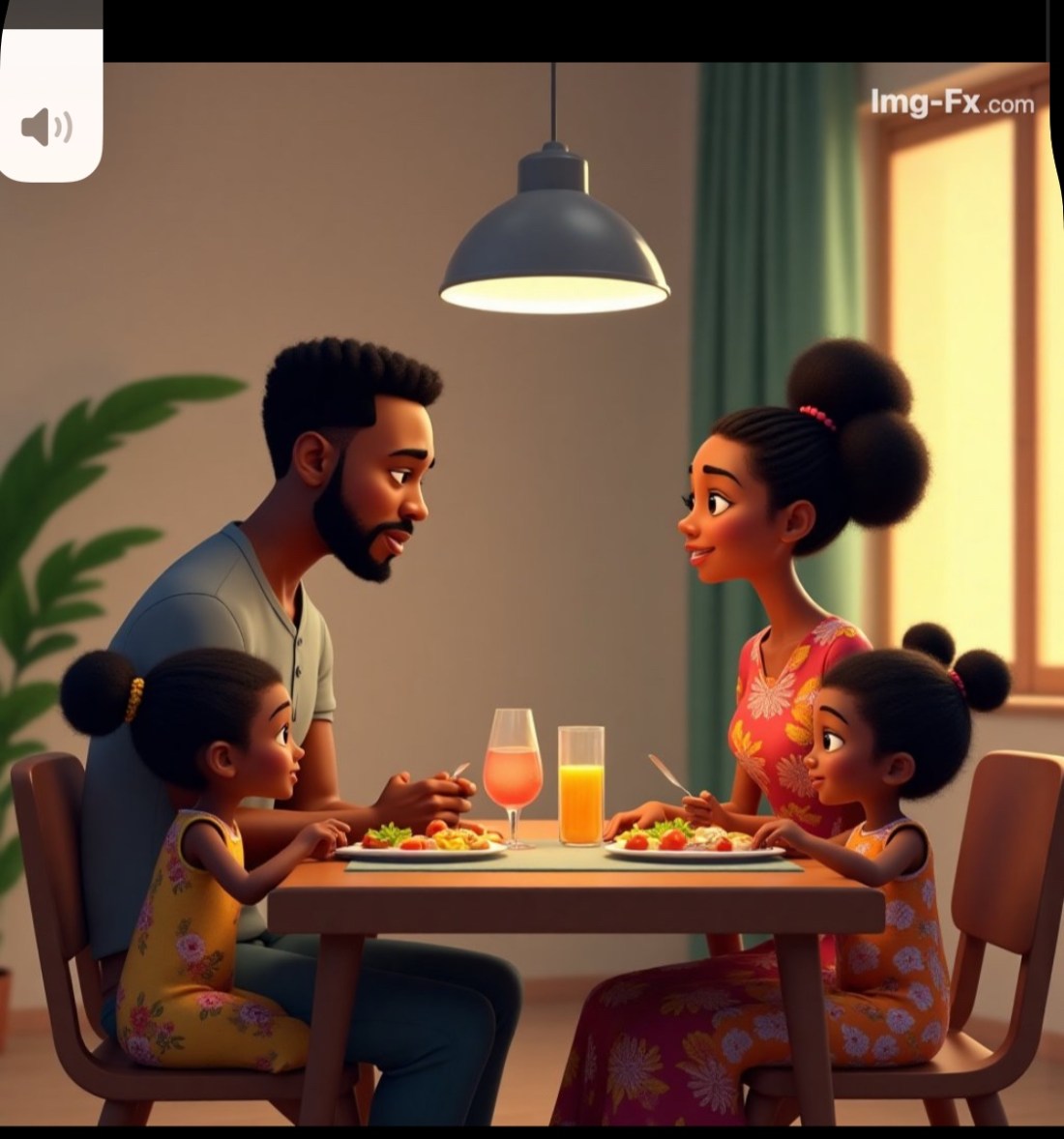
Those were the moments when you were alive!

What’s a moment in your life that made you feel truly alive?

Sometimes we only recognise the moments that made us feel alive after they have passed. 

This question resonates with me right now in a way that makes me feel like I am not myself anymore.

This is not me. No, no. But somehow, it is still me.

The funny thing about emotions is that, regardless of how you feel inside, they don’t immediately change your reality. Life continues. The sun rises. People go to work. Bills still need to be paid. Responsibilities don’t disappear simply because you are struggling internally. I don’t even feel like writing at the moment.

I have a long list of blog posts waiting to be written, so it’s not as if I have run out of things to say. And that doesn’t mean these prompts aren’t important. They are.

But lately, I’ve been dealing with anxiety about past experiences, uncertainty about the future, and disappointment over some of life’s shortcomings and failed dreams.Sometimes, those things become so loud that they make you forget your successes.

You remember what went wrong but forget what went right.

It is a natural part of being human. But when such feelings linger for too long, they can become frightening and difficult to escape.

Yet life has also given me many moments when I felt completely alive.Moments when I felt on top of the world.Moments so beautiful that I wished I could experience them again.

Perhaps those moments are part of the reason I keep going today.

I may not remember every moment of happiness from my early years, but as I have grown older and become more self-aware, I have started attaching greater value to things I once considered ordinary.

Sometimes you don’t know what you have until you lose it.We hear that phrase so often that it almost sounds like a cliché. But perhaps we should take it more seriously.

Maybe you have never stopped to appreciate your current situation because the world keeps telling you to aim higher.You should earn more.

Achieve more.Buy more.Become more.

There is nothing wrong with ambition. We should aspire to a better future.

But you can aspire for more while appreciating what you already have.

You can want a better life and still recognise that the life you currently have contains moments worth celebrating.

There have been many moments in my life when I felt truly alive.

I remember travelling home from Europe for the first time to see my late parents in the village.

I remember reaching certain levels of financial independence. And alsoI remember becoming a father for the first time.

Each of those moments felt special;But perhaps I didn’t appreciate them enough while I was living them. The most remarkable of all, however, was having my family together. My wife and children under the same roof.

Those ordinary days—despite the struggles, responsibilities and imperfections—gave me something I didn’t fully understand at the time.

They made me feel alive.

They made me feel like I was exactly where I was supposed to be but Life, however, does not always move in a straight line.

We aspire for a better future, but along the way we encounter failures, difficulties and circumstances that can take us further backwards than we ever imagined.

And when that happens, something strange happens. You begin to look backwards and start

remembering the things you once had.

 The people who were there and  places you once called home. You remember moments you once considered ordinary.And suddenly, you realise:

Those were the moments when you were alive.

My parents are no longer here.

I am away from home.

I have been away from my family for a while.

Financially, I find myself trying to rebuild things I once thought were already established.

Perhaps this gives you a little insight into why this question resonates with me so deeply.

I am not really in the mood to write tonight.

But I couldn’t ignore a good question when it presented itself.

And perhaps that is another moment of being alive—having the ability to recognise something meaningful even when life doesn’t feel particularly meaningful at that moment.

The interesting thing is that I have been in difficult circumstances before and somehow, I survived them.Eventually, better moments came;

That gives me hope that the moments ahead of me can be greater than anything I have experienced before.But this time, I want to recognise them while they are happening.

I want to appreciate the laughter while I am laughing,The presence of family while we are together.The small victories while they are still small and  ordinary days before they become memories.

Because perhaps being alive isn’t always about experiencing something extraordinary.

Sometimes, it is simply about recognising the extraordinary value of an ordinary moment.

So, if you are reading this, don’t wait until you lose something before you realise its value.

Look around you.

Look at the people beside you.

Look at what you have achieved.

Look at how far you have come.

You can still dream about tomorrow.

You can still work toward something greater.

But while you are doing that, please don’t forget to appreciate today because one day, today might be the moment you desperately wish you could live again.

Appreciate your moment while you are still living it.

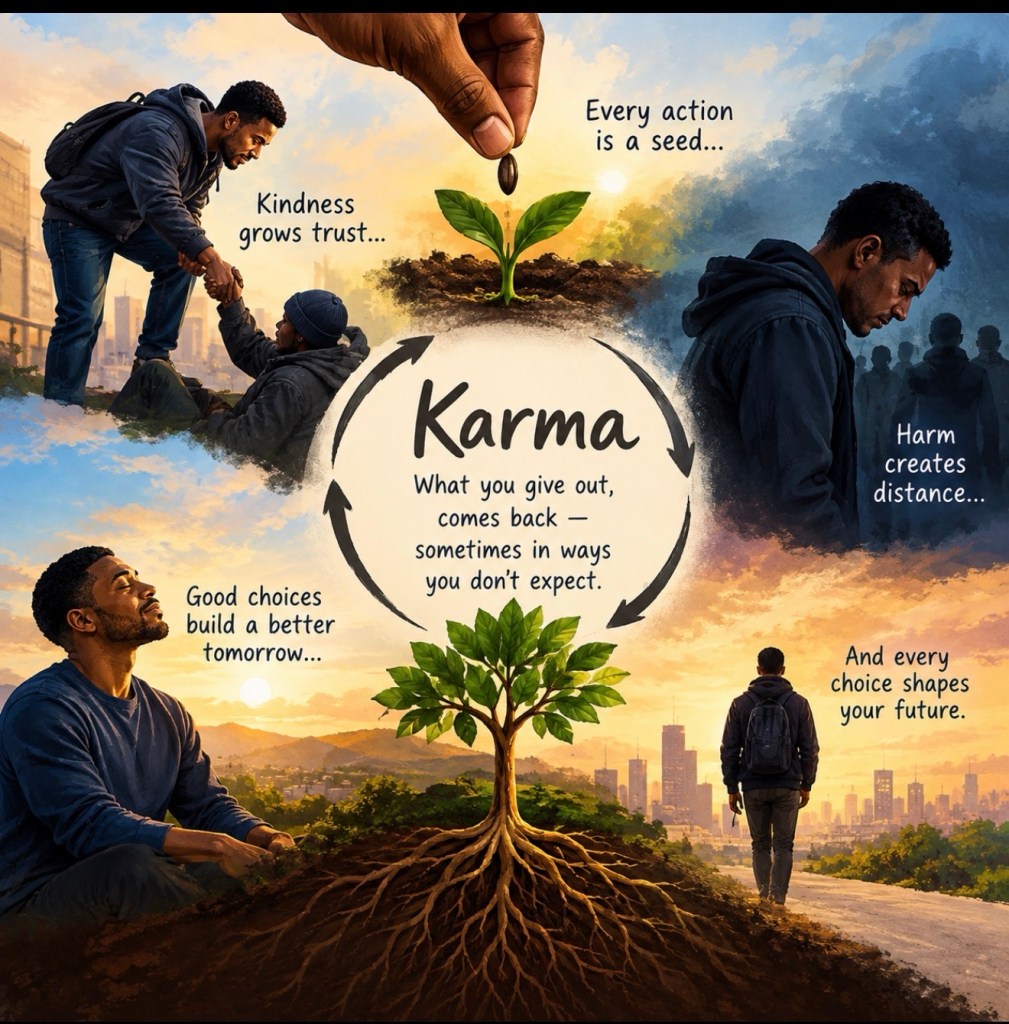
Maybe Karma Isn’t What We Think It Is”

Do you believe in karma?

What If Karma Isn’t About Revenge?

It is important to understand that karma is not necessarily a cosmic judge or an instant punishment system that appears whenever someone does something wrong.

For as long as I can remember, I have considered myself a student of the idea of karma, even though I did not always understand its deeper meaning. For a long time, I simply associated karma with punishment for wrongdoing.

It is normal to believe in something. Beliefs can empower us, guide our conscience, and give us something to aspire to. But belief alone is rarely enough.

For example, if you believe you will become wealthy, you cannot simply pray for wealth and wait for it to arrive. You have to put that belief into practice by participating in activities that can create wealth.Yet even when two people follow similar paths, they may experience completely different outcomes.

And still, I believe in karma.

Look around us. With the level of aggression, wickedness and violence we witness in the world, some people argue that karma is overrated. They ask: Where is the punishment? Why do people who hurt others sometimes seem to live perfectly comfortable lives?

They have a point.

It is rare to witness someone who wronged you receive an exact or proportional punishment for their actions.Sometimes, people hurt others and appear to get away with it.

But perhaps this is where our understanding of karma needs to change.

Karma, in many traditions, is understood as a principle of cause and effect. An intentional action can set off a chain of consequences, much like planting a seed creates the possibility of a particular plant growing.

But even that analogy has limitations.

Not every seed grows.

Some are planted but never receive enough water. Some are destroyed by the weather. Others grow differently from what we expected.

They grow slowly.They become part of us.!

The older I become, the more I understand that the meaning of karma can differ from one person to another, depending on their beliefs, experiences and circumstances.

And perhaps karma is not only about what we do physically but also how  we  think and our choice of words.

Our thoughts influence our words. Our words influence our actions. Our actions become habits, and our habits gradually shape the lives we live.

In that sense, perhaps karma isn’t always about someone else being punished.

Sometimes, the consequence is simply becoming the person our choices have created.

If you constantly choose anger, you may build a life surrounded by conflict. If you choose kindness, you may build relationships rooted in trust.If you repeatedly deceive people, you may eventually find yourself surrounded by people who no longer trust you.

These consequences may not arrive dramatically. There may be no lightning from the sky, no mysterious punishment, and no moment when the universe announces that justice has been served.

Sometimes, consequences are much quieter.

They grow slowly.They become part of us.

So, do I believe in karma?

Yes, I do.

But I no longer believe karma works according to my assumptions or according to the punishment I think someone deserves for offending me.

I believe that our choices have consequences—sometimes directly, sometimes indirectly, sometimes immediately, and sometimes years later. We may never see every consequence or  know what happened to the person who hurt us,

And perhaps we don’t need to.

Because life has a way of teaching us that what we repeatedly put into the world can eventually shape the world we live in.

We may not always receive exactly what we give, but we rarely remain completely untouched by what we repeatedly choose to give.

A Late-Night Answer to a Simple Question.

How do you write what people actually want to read?

People Haven’t Stopped Reading. They’ve Become Selective.

It is late, and I desperately need to rest. But it has been a while since I responded to one of those writing prompts, so tonight, I decided to give it a try. The question is simple:

How do I actually write what people want to read?

Writing is something we learn, but great writing often comes from something deeper—passion. Becoming a good writer requires skill, practice, patience, observation, and, above all, deep thinking.

A good writer captures your mind, creates curiosity, and holds you until the end. Sometimes, you think you already know where the story is going, yet the writer leaves just enough uncertainty to make you keep reading.

That, to me, is the beauty of writing.

But how do you write something people actually want to read?

It is easy to argue that people no longer read as much as they used to. We live in the age of social media, short videos, notifications, and portable screens. People scroll through content constantly, often giving only a few seconds to whatever appears in front of them.

But I don’t think people have stopped wanting stories.I think they have simply become more selective about which stories deserve their attention.

I have been writing for a long time. I remember keeping records of my activities and thoughts in a diary when I was in my early secondary school years. I even wrote my first book in a notebook.

Unfortunately, many of my early writings are gone. Some were lost to floods, some to fire, and others simply disappeared because I didn’t have the means to store them properly.

Still, the desire to write survived.

I studied literature and read books by some of the world’s greatest writers, including Chinua Achebe and William Shakespeare, among many others. I have continued reading contemporary writers and discovering new voices.


Still, the desire to write survived.

Literature teaches you that words are more than words. You learn about irony, hyperbole, oxymoron, sarcasm, symbolism, suspense and countless other ways of making language more powerful.But beautiful language alone does not make people read.

People read because something in the writing speaks to them.

Sometimes it is a question they have been afraid to ask. Sometimes it is an experience they have lived but never found the words to describe.

Sometimes it is simply curiosity and sometimes, they see a little bit of themselves in your story.

Perhaps that is the answer I have been looking for.

Writing requires deep thinking, narrative skill and precision. But it also requires understanding your audience, your message and the story you are trying to tell.

You don’t always have to write what people think they want to read.

Sometimes, you simply have to tell the truth in a way that makes them want to keep reading.

I don’t know if you still have an interest in this article but if you’ve made it this far, I guess I’ve already captured your attention.

And isn’t that the beauty of writing?

We are all narratives in progress and our stories are still being written.

Maybe writing shouldn’t be about constantly projecting what people might want. Maybe it should be about understanding the story, knowing the audience, finding the message—and then telling it honestly.

Perhaps that’s how I continue to write things that people like you still want to read.

Thank you for always reading,liking, commenting and encouraging me to keep writing.

It is past 11 p.m. now. I’ve completed my tasks for the day, and I’m off to rest. I have an early morning class and another tight schedule tomorrow—and for the rest of the week.

But tonight, at least, I wrote.

And perhaps that’s enough until the next one.

Life is not knowing what comes next.

How do you deal with uncertainty?

Your super powers lies in moving on

I just finished my Spanish lessons for the day, after another night when sleep refused to come. The night shift has changed my entire life system. Even after a rigorous workout, I can still find myself lying in bed, turning from left to right, hoping for just a few hours of rest.

And then comes uncertainty.

I can barely remember a time when my future felt certain rather than constantly suspended in questions. What happens next? Will things work out? Did I make the right decision?

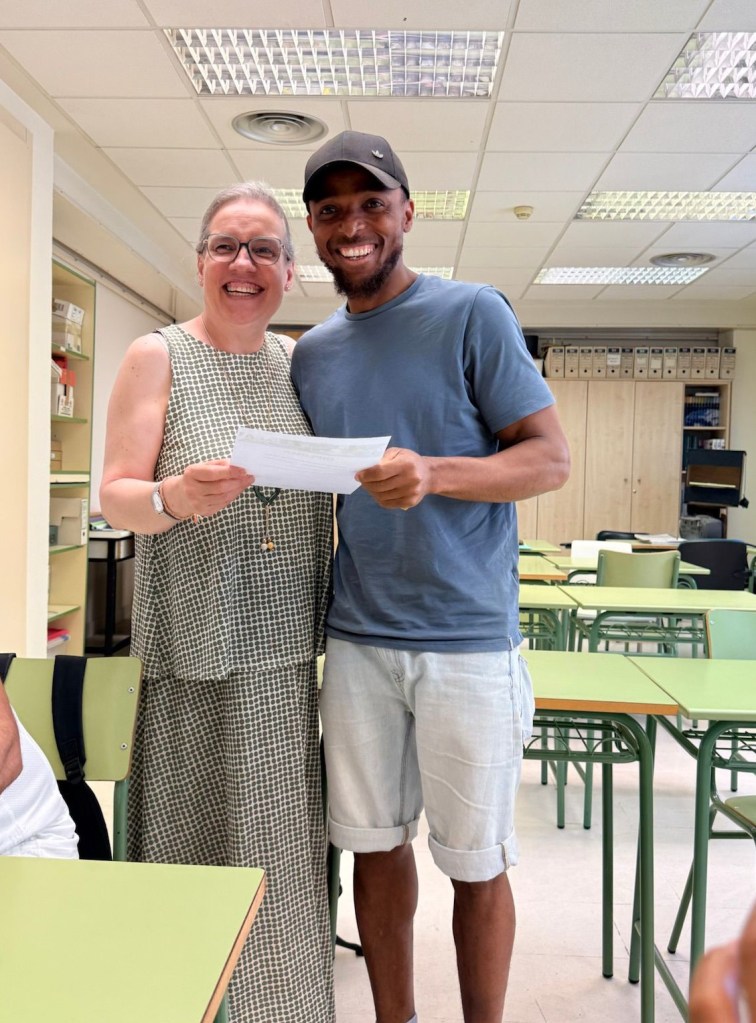
Gracias profesora por toda tu ayuda

I used to believe that the future is what you make of it today. I still believe in taking action, making plans, and preparing for tomorrow. But I have also learned that uncertainty exists regardless of how carefully we plan.

How we deal with it may be the real superpower.

I am not always good under pressure. Sometimes, when reality doesn’t match my plans, I lose myself in my thoughts. I question my decisions, ask, “Why me?”, and replay everything that went wrong.

But eventually, I reflect, learn, adjust, and continue.

Perhaps every uncertainty carries a hidden message—an invitation to become a stronger, wiser version of ourselves.

Yesterday, I went to fitness hoping it would help me sleep. It didn’t. I returned to my studies anyway, carrying the exhaustion and uncertainty with me.

Maybe that’s life: not knowing what comes next, but choosing to keep moving anyway.

How do you handle yourself when life becomes uncertain?

Needless of a proof!

What’s a moment when a stranger completely restored your faith in people?

Proof may not be necessary for faith, but that doesn’t make evidence useless.

We don’t need evidence to believe in God, but humanity will be restored with a small deed of kindness!

Strong trust or unwavering belief in someone or something, frequently without the need for evidence, can be characterised as faith. It can entail having faith in God or a particular religion, having faith in someone, etc. I could only relate to the latter, not the former, in terms of my forty years on this earth and my life experiences! However, life frequently depicts humanity in its best form, regardless of the negative experiences one has with loved ones and those we cherish. I think there are still good people in the world.

On the kindness pathway …

It was rush hour on my way to work this evening, and the train station was crowded with passengers boarding and deboarding at every stop. My journey took more than an hour; to avoid being late, I’d rather arrive an hour earlier. However, as the train came to a halt at our second stop, people rushed to board in order to secure a seat. I noticed someone on their knees, struggling to get in, as people of all ages passed by. I was eager to capture what it was until a passenger ran toward the door and helped an elderly woman in her mid-80s get into the train and sit down. I was moved by the male passenger’s gestures toward the woman he had never met before.

Little things in life make a big difference if we can all be compassionate.

Nonetheless, I was stranded on my way home from work earlier this year because I had run out of bus tickets; in other words, I had to buy a 3€ ticket in order to get home, which is an hour’s fast drive from my station. I only discovered my card wasn’t working when I tried to clock in. Tired, stranded, and stressed 

After working for eight hours straight, all I wanted to do was go home and rest. I tried explaining to the driver for consideration but was unsuccessful, and it was 4:30 a.m. As I was about to leave the bus, a male passenger approached me and offered to pay for my ticket. I was overjoyed at his kindness and mercy toward me. A stranger watching out for another stranger (me). On rare occasions, strangers’ acts of kindness have restored my faith in humanity through small gestures that melt my heart more than gold and silver. Proof may not be necessary for faith, but a little act of kindness is pathway to restore faith in humanity .

The Good Use of Pain!

If your future self could send you one sentence, what do you hope it would say?

Make Good Use of Your pain

Breathing heavily as I ran to catch my bus, which has irregular schedules, I had just finished my night shift, and it was 3 a.m., having worked for a straight eight hours, but because I desired to get home as soon as possible, I had to sprint the mountain pathway to get my bus, which normally is a twenty-one-minute walk.

Finally I reached the bus station and realized that I had not checked my phone for the past eight hours, picking it up I saw a message from yahoo mail ,July statistics for untold realities I decided to click on it, tho before now I had decided to revisit or better say restart my blog which was hesitantly abandoned because of circumstances beyond..​which will definitely come to lime light as we progress.

What single sentence could my future self send me? The heading caught my eye and my thoughts and ignited the flames to my writing prowess and announced my return to Untold realities.com. This was the first time I saw a question of phrase type and I couldn’t let it go

Be on time …or Race against time

Luckily for me the bus came a minute after I got  to the station , so I quickly clocked in and sat down as the air conditioning pelted my tense skin.  The sprinting was not in vain, still I have two hours and two more buses to catch before I get home. Writing while on public bus is not new to me, as it moves and swings my mind delved deeper into my future self and the sentence they would have said to me today. ​

Everyone goes through rough patches in life, but few make use of the pain for a better future… I work, study, pray, and even cry sometimes remembering where I have been, what I had, and what I am missing, but … the future I am fighting for at the moment is one not without struggle but one with greater and better experiences than the past for me and my family, especially my two lovely daughters. Hence, I believe the words from my future self today would be, “Thank you for making good use of your pain in making today better. Thank you for believing and not giving up.”

However I just got off my second bus and looking at the time as I conclude this writing, it’s 04:22 in the morning Tuesday 11 ,2026 I believe a day will come I will come back to this post to appreciate life for a dream come true, Knowing that if I may run in the future after work, it would be for myself (company) with my expensive car. Make good use of your pain .

Knowledge unused is still power stored.

Who was your most influential teacher? Why?

What you learn today may save you tomorrow.

Life teaches us things both directly and indirectly, and it is our responsibility to apply the knowledge we have learned at the time to the situation or individual.

A teacher, also known as an educator, is a professional who works in educational settings to create and carry out instructional strategies in order to assist students in gaining knowledge, competence, or virtue. They are essential for promoting learning and intellectual development. Early childhood, elementary, and secondary education are just a few of the levels at which teachers can work. However, learning is an ongoing process that is not exclusive to humans and continues until the end of life.

It was fascinating to grow up; I wanted something special as a kid. I was bold, inquisitive, and willing to learn, but even though I prioritized learning, life has hidden agendas.

However, a teacher in my early secondary school years stood out not because of his subject (introtech), which is primarily drawing and cannot be compared to other subjects like English, and literature,which I preferred and paid more attention in my early secondary years.

which contributed towards my ability to write this piece for you today.

We all learn and understand differently but some teachings can only be understood uniformly. Every teacher has a different method of imparting knowledge, and it is our responsibility to interpret meaning in order to comprehend it.

*Better have it and not need it!*

The most fascinating aspect of education is that, when properly assimilated, it greatly influences our future, knowledge, and way of thinking. Furthermore, it is not limited by time; depending on the situation surrounding its application, it may be used and requested decades after it was acquired or right away.

My introtech teacher, an elderly man in his late 60s who frequently deviates from his subjects to offer advice in parables, speaks calmly and directly to his students. He always guided his students, to understand that the future is partially, if not entirely, funded mentally by current behaviors, and that long-term goals are preferable to short-term rewards.

However, not every student in my class liked him, as many made caricatures of his advice, but as someone who was raised in a home with similar words and a strong curiosity, I also believe in his teaching and ideas.

One day, he demanded quiet in his class because some students were making too much noise. He said. * Listen to what I say; I am older and more experienced. My advice is intended for your own good. You may not get this kind of advice from your parents or anyone else in your life, which is why you should listen when I speak; no knowledge is a waste. *It is preferable to have knowledge of something and not need it than to need a knowledge and not have it. What you learn today may save you tomorrow.*

Decades after his death, I can still hear what he said. My introtech teacher’s remarks contributed to my understanding of the importance of education, even though my parents had a bigger and more profound influence on my knowledge and intelligence.

My grandmother’s mark!

What tattoo do you want and where would you put it?

“No two stories are the same, and neither are their expressions.”

I’m thinking about getting my third tattoo, but I’m not sure what, where, or when.

The history of tattoos can be traced back to ancient times. As a young child, I was unable to understand the significance of my grandmother’s mark on her right arm, but I could still recall it. Although they had different names for it than “name tattoos,” I was unaware that it was even called a tattoo at the time.

Just as each of us is distinct due to our varied personalities, experiences, and backgrounds, so too are our modes of expression.

A tattoo is a permanent, irreversible design, mark, or text that is applied to the skin by injecting pigment and is used for cultural marking, self-expression, or remembrance. stamping, branding, and body art. They frequently represent personal beliefs, such as an anchor for stability, a bird for freedom, or a phoenix for rebirth; however, because they are susceptible to removal, they are no longer permanent.

Every story has an angle of expression!

Recalling my first tattoo, which I may not reveal for security reasons, was the result of experience, tenacity, faith, and success—though not without luck and God, which I recently acknowledge. While some people would rather have their tattoos visible in an open area, I prefer distinctive, neutral locations that are neither open nor hidden. A written statement that strengthened my struggle for survival and calmed my heart. Despite the fact that it was poorly styled, I adored it. I’ve been asked a few times what your tattoo means, and the most lovely thing about it is that I came up with the words, so it was a prototype. You are in control of your world if you conquer your fears.

My second tattoo came many years after my first; unlike the first, it was a Pinterest arrow depicting success born of adversity. I discovered it online and adore it because of its unique design and simplicity. However, like the first, it was placed on a part of my body that is neither hidden nor visible. My young daughters have frequently inquired as to what it means and why I had them, but due to their age, I read it aloud and explained the drawing for peaceful protest, knowing that until they reach adulthood, they will struggle to understand its meaning and purpose, just as I was unable to understand the markings on my grandmother’s arms. However prior to my adulthood I felt uncomfortable being around people with obvious markings (tattoos) for no apparent reasons until I learned to not judge people whose stories I knew nothing about.

As a result, considering my third tattoo, what and where is futuristic and certain but not imminent? I haven’t decided what to have or where to put it, but it will undoubtedly be measured and characterized by a purpose not dissimilar to the previous ones, but this will be of great significance and importance because of the magnitude of greatness and success that I have witnessed beyond difficulties .

You are a different animal, nothing less.

Which animal would you compare yourself to and why?

The rain elapsed, followed by a slight sunshine. Having been home all day due to the reduction in job demand by the company I currently work for, I was among those laid off till further notice. Cold and jittery, my mind took the greater part of me. It has been raining all through this month, to the surprise of everyone. Where does the hall of mountain sunshine seem to be suddenly becoming a cold water forest? Maybe it’s climate change. Madrid, the center of Europe, has monotonous weather. 

What again is this topic about? * Which animal would I compare myself to and why? 

I quickly stepped outside the gate to grace the noon sun, which pelted my spirit and soul and had me in the same position with my body fighting over the best position, which was most enjoyable. Putting my face up directly to the rays of sunlight, eyes closed, wishing that I could be made to lie down in my position for a long period of time, though I was only in front of my house building, resting partially on a parked vehicle. Many passersby understood the importance of the sun to me, judging by their looks towards me, of which I paid no attention. Suddenly there was a bird noise, which reminded me of a particular bird back then in my hometown, usually heard early afternoon and evening, a unique one though. However, that is not the type of animal I am or like to be compared with, but I love its gentle and peaceful nature. 

Irrespective of your kind,no animal survives alone.

Even as the memories of hunting them for food in the past resonated in my mind, something I frown at currently because I believe that every animal has the right to life. There sit two birds of the same feather, like the usual words (they flock together), but something stood out that had me in awe, even to the point of taking my mind away from these golden rays of sunshine. I looked furiously towards the birds sitting on telephone cables; it appeared that they were young couples or friends of opposite sexes. It was my first time seeing such intimacy between such animals, even in humans. At first they spoke to each other in their language, then kissed passionately. I became confused because I never believed my eyes. Then they mated, after which they caressed each other by picking each other’s feathers, even to the extent of laying their heads on each other. I froze at my position, not realizing how long I had been gazing at these wonderful birds. Maybe the universe was talking to me indirectly about how life, courtship, friendship, and marriage should be, or maybe I am lost in my own thoughts. I quickly ran inside, having enjoyed the sun and the birds’ companionship… 

As humans, we are nothing less than a different animal, but whichever you choose to be, or compared with! Let it be with love, openness, and tolerance for one another; For irrespective of your kinds, no animal survives alone.