Nobody Warns You About the Loneliness of Starting Again

Featured

I may have lost a lot.But I haven’t lost the reason I’m fighting.

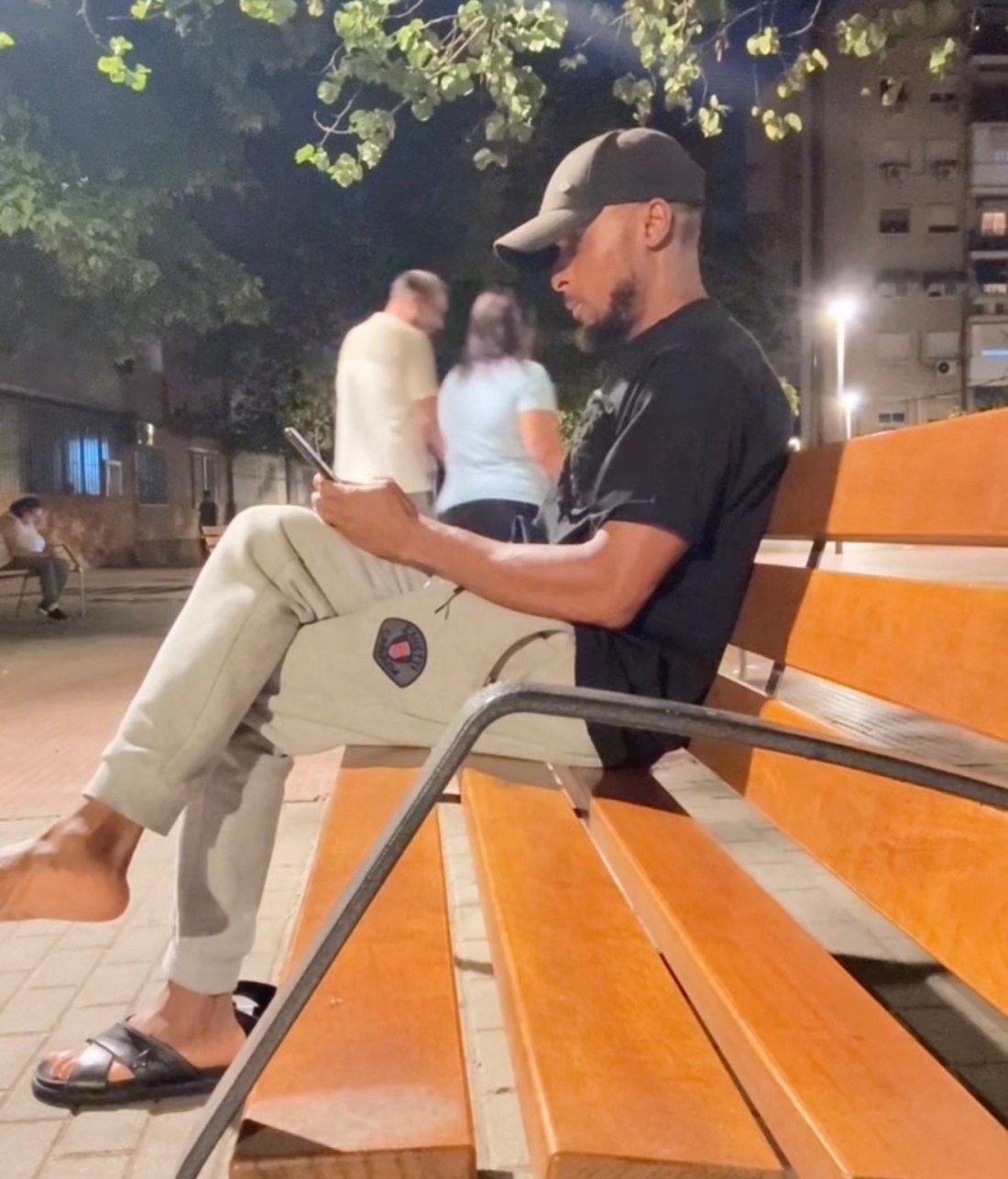
It was late evening.

Having been indoors throughout the day, I decided to step outside for some fresh air.

Here in Madrid, the atmosphere can be refreshing even when the weather is warm. I guess that is one of the reasons Spain is one of the most visited countries in Europe.I love Spain. It’s obvious.

I have lived in different European capitals, experienced different atmospheres and cultures, and perhaps that has given me a unique perspective on the places I have called home.

Close to my house are several parks where people living nearby relax after work and on weekends.

So I decided to walk a little further from home.

I eventually found myself near an area where children were playing while their parents and guardians watched them.And suddenly, I was somewhere else.I was back in London.On a normal day, I would take a walk to the park with my younger daughter.She loves the swings.

“Daddy, higher!”

I can still hear her saying it, pressing me to push harder as the swing moved higher and higher.

Then her older sister would take her turn.

Those moments were ordinary and I never thought much about them.But standing there in Madrid, thousands of miles away, watching other children play while their parents enjoyed the evening with them, those memories came rushing back.

I felt lonely.Not because there was nobody around me.There were people everywhere.

Children were laughing and Parents were talking.

The park was alive; Yet somehow, I felt completely alone.

I guess nobody warned me about the loneliness of starting again.

I have been a lone person for most of my life.

And in many ways, that helped me understand myself.I learned to enjoy solitude.

I became comfortable with silence, deep thought and my own company. Being introverted, independent and proactive, I never imagined that one day my heart could be so affected by the absence of other people.

Then I had children.

They say children can change even the strongest man.I believe it now.

Before my children, being alone was a choice.

After my children, being alone became something completely different.

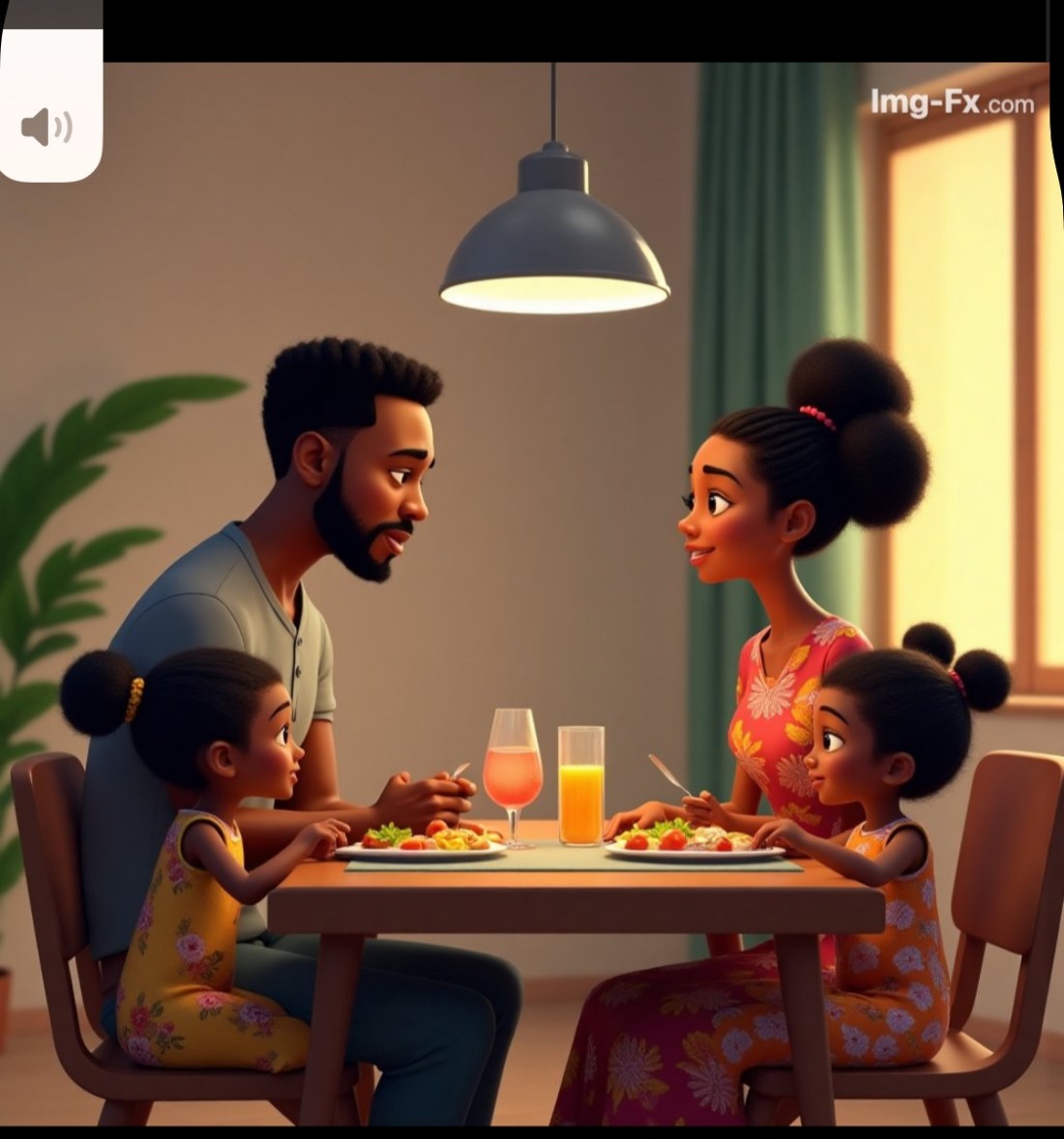
On days when we didn’t go to the park, we would sometimes set a table in our backyard though It was a small space.There was only a table and two chairs,But somehow, we made it work.

We enjoyed each other’s company as much as we could.

That small backyard felt bigger than the largest park when my children were there.

Now I can sit in a much larger park.

There are tables as well as benches.

There are people everywhere.And still, I feel lonely.

Because circumstances have a strange way of changing your definition of what you need.

I used to think I needed space but now I realise I needed them.One thing about circumstances is that they are never constant.

I have always believed that being able to foresee and prepare for what might happen is a kind of superpower.Unfortunately, I didn’t see this coming.Things changed so quickly.

One moment, life seemed to be moving forward.

Then everything started falling apart.I lost my job.

A week later, my wife lost hers.Then came the worst news.

Our visa was cancelled, and we were asked to leave the country.Then we were scammed.

Not once but Twice.

Within a relatively short period, the life we thought we were building became something we could barely recognise.I lost what I had.

We were in debt and broke.

And suddenly, starting again wasn’t a choice between several comfortable options.

It became the only option I could see.

Relocating without my family to search for solutions was not something I wanted.

Leaving my wife and my children behind without the stability I had hoped to provide was painful.

And it was not always understood by everyone around us.But sometimes life puts you in situations where there are no perfect decisions.

There are only difficult ones. So I left.

I came to start again from almost nothing.

But as painful as losing a job, money, possessions and stability was, none of those losses compared to one thing.

The separation from my family.

Especially my young daughters.That is the part nobody prepared me for.

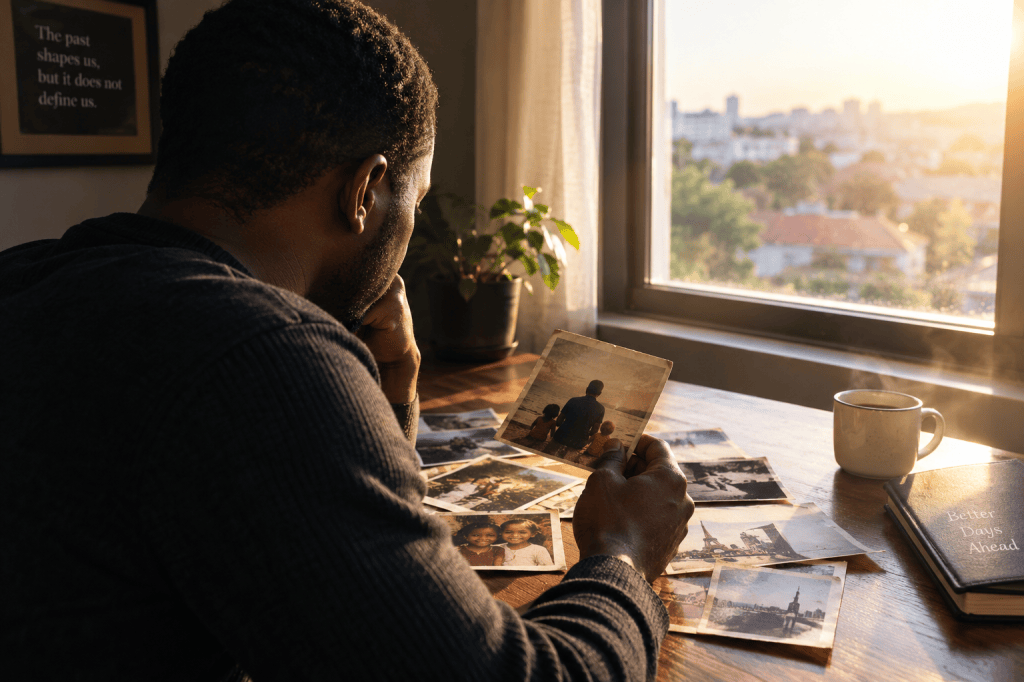
Nobody told me that starting again could mean sitting alone in a beautiful park and feeling the absence of the people you love most.

Nobody told me that seeing another father push his daughter on a swing could make you miss your own children.

Nobody told me that the smallest memories could become the heaviest things you carry.

I came here to rebuild. To find a way forward.

To create stability and give my family another chance.But rebuilding is not always exciting.

Sometimes rebuilding looks like loneliness

And walking alone.

Sometimes it means watching other families enjoy the moments you wish you were experiencing with your own.

And sometimes, starting again means carrying your memories with you while hoping that one day you will return to the life you had to leave behind.

Nobody warns you about the pain and loneliness of starting again.

But perhaps there is another side to it.

Starting again also means there is still something to build. There is still hope.

There is still tomorrow. And as I walked home from that park, I reminded myself:

I may have lost a lot.But I haven’t lost the reason I’m fighting.

My family.

And until the day we are together again, I will keep walking.Keep rebuilding.Keep believing.

Because sometimes the loneliest chapter of your life is simply the chapter before everything begins to change.

Featured

Why you ought to cherish your kids’ early years.

Raising children is an ongoing process that requires selflessness, courage, and a lot of giving. Many parents today lack this courage because they are too focused on providing for their children and miss out on some of the most significant, fascinating, and beautiful moments from their childhood.

The first is that it advances your professional, friendship, and fatherhood. Children are impulsive, don’t think twice about what they do, and communicate from the heart. It gives you experiences and enables you to discover the true beauty of life. 

As a father, you must be in the photo or tale cover of your child since childhood is the time of life when we all grow up with unadulterated energy and memories that are kept with emotions in our hearts. It also marks the beginning of our final chapter with our family, loved ones, and life. Old age is beautiful because of the memories from our childhood; they also help us remember things. Additionally, it revitalises and renews our soul, enabling us to reflect on the past, recognise the value of time, and gain a deeper understanding of what life is all about.

Many of us weren’t even there when our kids were born or during their pregnancies. It’s equally harmful to not have these kinds of experiences.

 Additionally, it prepares us for instances where we will have to give guidance to our children in the future. 

It’s the period when strong ties between parents and children are formed.

It benefits you as well as your children on their own.

Lesson I learned the hard way!

What’s one thing you know now that would have saved your younger self a lot of pain?

A Good Heart Needs Boundaries

Had I known then what I know now, perhaps I would have saved myself years of unnecessary pain. Perhaps I would have made different decisions, trusted different people, and learned to walk away from situations I once fought so hard to preserve.

But life rarely gives us the wisdom before the experience. Sometimes, we must live through the lessons before we can understand them.

I had just finished dinner and packed my books into my backpack. My scheduled study time hadn’t gone as planned, and it was already past nine in the evening.

The day had been busy. I had gone to the gym, returned home to cook, made calls to old friends, visited a friend, done my laundry, and tried to squeeze in some writing between my chores. Unfortunately, the writing hadn’t happened.

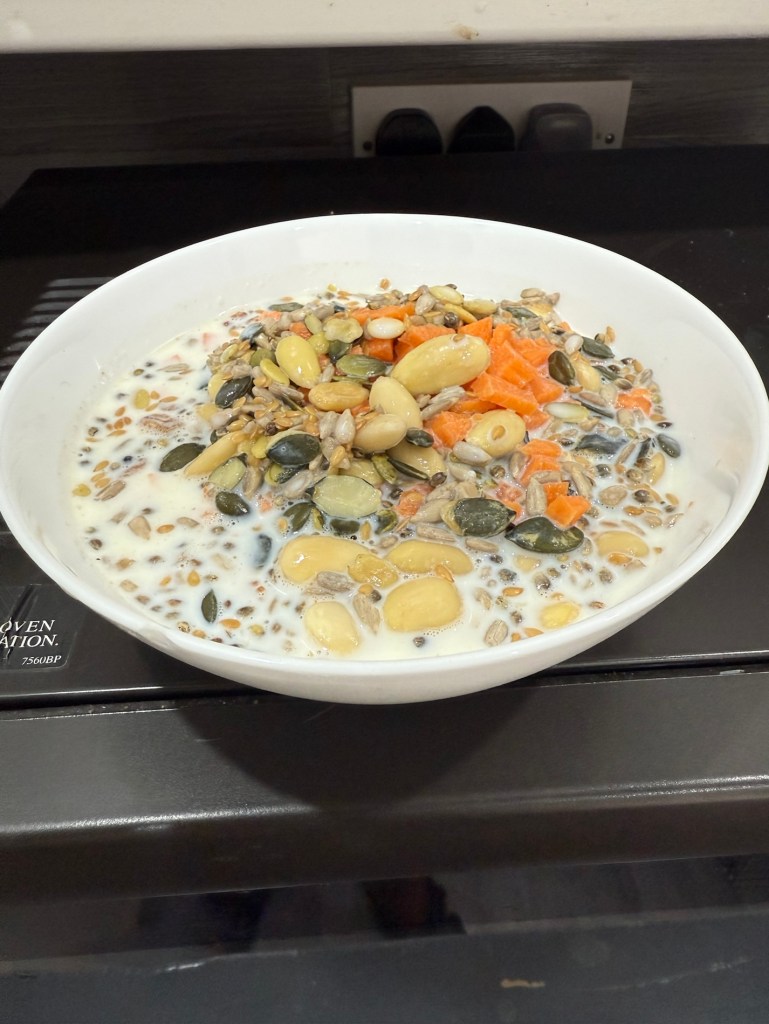
This night, I decided to have muesli with carrots, peanuts, and sunflower seeds—one of my all-time favourites.

After eating, I carried my backpack from the dining room to my bedroom. I sat on my bed with my phone in my hand and began scrolling through social media.

I hadn’t published an article for several days. I knew some of my readers might be waiting for another story because I regularly checked my blog statistics. Each time I saw people visiting my website, I reminded myself that I had a responsibility to keep writing and, hopefully, to give them something worthwhile to read.

As I scrolled through the prompts, one question caught my attention:

What is one thing you know now that would have saved your younger self a lot of pain?

I immediately felt that one thing wasn’t enough.

Why should I limit myself to one lesson when life had taught me so many?

Perhaps the better question is: 

What are the things you know now that you wish you had understood earlier?

This is my attempt to answer that question—not to dwell on the past, but to share what it has taught me.

Life Is a Continuous Lesson

Life is a continuous process shaped by circumstances, decisions, mistakes, and repetition. Some lessons come gently, through observation and advice. Others arrive through painful experiences we would never willingly choose. The unfortunate truth is that some decisions can only be made once, yet their consequences may follow us for years.

I prefer my writing to inspire and uplift rather than leave people feeling dark and depressed. However, sometimes we must acknowledge the painful parts of life before we can fully appreciate the beautiful ones.And so, I continued scrolling through my Instagram pictures, looking at the life I had lived before now. I saw the rise and the fall, the trust and the betrayal, the crowds and the silence, the friends and the foes.

I remembered people who once claimed they could not live without me. I remembered those who came around because of what they could gain. I remembered the flatterers, the dishonest people, and those whose respect seemed to depend on my ability to solve their problems.

I remembered the times my good heart was mistaken for weakness, my patience was taken for granted, and my intentions were misunderstood. Most importantly, I remembered the people I had allowed into my life when I should have kept my distance.

The Lessons I Wish I Had Learned Earlier

One of the most important things I know now is that having a good heart does not mean giving everyone unrestricted access to it.

A good heart needs boundaries

I wish I had understood that helping people is a beautiful thing, but not everyone you help will appreciate your kindness. Some will remember what you did for them; others will remember only what you can do for them next.

I wish I had understood that not everyone who says they love you genuinely has your best interests at heart. Words can be comforting, but consistent actions reveal much more.

I wish I had learned that friendship is not measured by how many people surround you when life is good, but by the sincerity of those who remain when you have nothing to offer.

I wish I had understood that respect should not depend on my usefulness. I am still worthy of respect when I cannot solve someone’s problem, provide financial assistance, or offer something in return.

I wish I had been more patient with my journey towards success. Impatience can make us desperate for acceptance, recognition, and results. Sometimes, in our hurry to become something, we forget that becoming takes time.

And I wish I had understood the importance of boundaries.

There were people I would have helped differently, people I would have trusted more cautiously, and people I would have walked away from much earlier.

I would not have humbled myself so desperately before people who never considered me their equal. I would not have walked a thousand miles for those unwilling to walk a kilometre for me.

I would not have confused my good intentions with a guarantee of good outcomes.

Because the truth is simple: you can have pure intentions and still make poor decisions about the people you trust.

A good heart is a gift, but wisdom is what teaches you how to protect it.

Despite everything, I refuse to believe that helping people makes you foolish or that trusting someone automatically makes you weak. The world still needs kind people, honest friendships, generosity, and love.

What I have learned is that kindness needs boundaries, trust needs time, and love should not require you to abandon your self-respect.

You can forgive someone without inviting them back into your life. You can wish someone well without continuing to carry their burdens. You can remain a good person without making yourself available to everyone.

And you can learn from betrayal without allowing it to turn you into someone who betrays others.

I don’t want the people who hurt me to determine the kind of person I become.

If anything, I want my experiences to make me wiser, more patient, more discerning, and more intentional about the people I allow into my life.

That, to me, is a better form of growth.

Looking at those old pictures, I realised how quickly life can change. The person you were five years ago may have had different friends, different priorities, different dreams, and a completely different understanding of the world.

Some relationships end. Some dreams change. Some people disappoint you. And sometimes, you discover things about yourself that you wish you had understood earlier. But the past is not only a record of what went wrong. It is also evidence of what you survived, what you learned, and how far you have come.

Perhaps the people who hurt you taught you to establish boundaries. Perhaps your disappointments taught you patience. Perhaps the mistakes you made taught you to look beyond words and pay closer attention to actions.

You do not have to be grateful for every painful experience to learn something valuable from it.

And you certainly do not have to repeat the experience to prove that you have learned the lesson.

I believe that before many great achievements come difficult seasons that test our patience and resilience. But I also believe that suffering alone does not guarantee greatness. What matters is what we learn, what we change, and what we do with the opportunities that follow.

Your comeback should not merely be a return to where you were. It should be an opportunity to become wiser than the person you were before.

Protect Your Heart, but Don’t Close It

There is a saying that when your intentions are pure, you are never truly the loser; those who wrong you are the ones who lose something valuable.

I understand the comfort in that thought. Still, I believe there is something even more important: we must learn to protect our peace without losing our humanity.

Not everyone deserves the same level of access to your life. Not everyone should know your plans, share your private struggles, or receive the same sacrifices you make for those who genuinely care about you.

Be generous, but learn to say no.

Be trusting, but allow trust to grow through consistent actions.Be patient, but do not remain indefinitely in situations that repeatedly diminish you. Be kind, but remember that you are also someone deserving of kindness.

And when someone shows you, repeatedly, that they do not respect you, believe their actions enough to make a decision. I once heard an analogy about feeding a wounded dog you find on the street. You may offer it food and care because you feel sorry for it, only for it to bite you after regaining strength 

The lesson is not that every wounded creature is dangerous or that kindness should be withheld. It is that good intentions do not eliminate risk, and compassion should be accompanied by discernment.

The same principle applies to human relationships. Someone else’s pain may explain their behaviour, but it does not mean you must accept being hurt by them. You can understand someone’s struggles without making yourself responsible for fixing them.You can care about people without sacrificing yourself to prove it.

And you can walk away without becoming their enemy.

If I could speak to my younger self today, I would not tell him to stop loving, stop helping, or stop believing in people. I would tell him to slow down.

I would tell him that success takes time, trust must be earned, and not every person who enters his life is meant to remain there.

I would tell him that he does not have to prove his worth by how much he sacrifices for others. He does not have to rescue everyone, explain himself to everyone, or fight to keep every relationship alive. Most importantly, I would tell him this:

Never let the way someone treats your kindness convince you that kindness itself was a mistake. Learn the lesson, establish your boundaries, and keep your heart.

We cannot go back and rewrite our younger years. We cannot undo every mistake, recover every lost opportunity, or change every person we trusted. But we can choose what we carry forward. Let us carry the wisdom, not the bitterness. The lessons, not the shame. The courage, not the fear. Because the real victory is not proving to the people who hurt you that they were wrong about you.

It is becoming a wiser, healthier, and more fulfilled version of yourself without allowing the past to steal the goodness that was always in you.

Your past may explain some of your pain, but it does not have to dictate your future. 

 Having finished writing this article, I can finally go to bed with the hope that you’ve gained some insights into the lessons life has taught me—the things I wish I had known earlier, which could have saved me a great deal of pain.

It’s almost midnight here in Madrid, and as I call it a day, I hope my words have given you something valuable to reflect on.

Good morning from Madrid! 🇪🇸❤️

Those were the moments when you were alive!

What’s a moment in your life that made you feel truly alive?

Sometimes we only recognise the moments that made us feel alive after they have passed. 

This question resonates with me right now in a way that makes me feel like I am not myself anymore.

This is not me. No, no. But somehow, it is still me.

The funny thing about emotions is that, regardless of how you feel inside, they don’t immediately change your reality. Life continues. The sun rises. People go to work. Bills still need to be paid. Responsibilities don’t disappear simply because you are struggling internally. I don’t even feel like writing at the moment.

I have a long list of blog posts waiting to be written, so it’s not as if I have run out of things to say. And that doesn’t mean these prompts aren’t important. They are.

But lately, I’ve been dealing with anxiety about past experiences, uncertainty about the future, and disappointment over some of life’s shortcomings and failed dreams.Sometimes, those things become so loud that they make you forget your successes.

You remember what went wrong but forget what went right.

It is a natural part of being human. But when such feelings linger for too long, they can become frightening and difficult to escape.

Yet life has also given me many moments when I felt completely alive.Moments when I felt on top of the world.Moments so beautiful that I wished I could experience them again.

Perhaps those moments are part of the reason I keep going today.

I may not remember every moment of happiness from my early years, but as I have grown older and become more self-aware, I have started attaching greater value to things I once considered ordinary.

Sometimes you don’t know what you have until you lose it.We hear that phrase so often that it almost sounds like a cliché. But perhaps we should take it more seriously.

Maybe you have never stopped to appreciate your current situation because the world keeps telling you to aim higher.You should earn more.

Achieve more.Buy more.Become more.

There is nothing wrong with ambition. We should aspire to a better future.

But you can aspire for more while appreciating what you already have.

You can want a better life and still recognise that the life you currently have contains moments worth celebrating.

There have been many moments in my life when I felt truly alive.

I remember travelling home from Europe for the first time to see my late parents in the village.

I remember reaching certain levels of financial independence. And alsoI remember becoming a father for the first time.

Each of those moments felt special;But perhaps I didn’t appreciate them enough while I was living them. The most remarkable of all, however, was having my family together. My wife and children under the same roof.

Those ordinary days—despite the struggles, responsibilities and imperfections—gave me something I didn’t fully understand at the time.

They made me feel alive.

They made me feel like I was exactly where I was supposed to be but Life, however, does not always move in a straight line.

We aspire for a better future, but along the way we encounter failures, difficulties and circumstances that can take us further backwards than we ever imagined.

And when that happens, something strange happens. You begin to look backwards and start

remembering the things you once had.

 The people who were there and  places you once called home. You remember moments you once considered ordinary.And suddenly, you realise:

Those were the moments when you were alive.

My parents are no longer here.

I am away from home.

I have been away from my family for a while.

Financially, I find myself trying to rebuild things I once thought were already established.

Perhaps this gives you a little insight into why this question resonates with me so deeply.

I am not really in the mood to write tonight.

But I couldn’t ignore a good question when it presented itself.

And perhaps that is another moment of being alive—having the ability to recognise something meaningful even when life doesn’t feel particularly meaningful at that moment.

The interesting thing is that I have been in difficult circumstances before and somehow, I survived them.Eventually, better moments came;

That gives me hope that the moments ahead of me can be greater than anything I have experienced before.But this time, I want to recognise them while they are happening.

I want to appreciate the laughter while I am laughing,The presence of family while we are together.The small victories while they are still small and  ordinary days before they become memories.

Because perhaps being alive isn’t always about experiencing something extraordinary.

Sometimes, it is simply about recognising the extraordinary value of an ordinary moment.

So, if you are reading this, don’t wait until you lose something before you realise its value.

Look around you.

Look at the people beside you.

Look at what you have achieved.

Look at how far you have come.

You can still dream about tomorrow.

You can still work toward something greater.

But while you are doing that, please don’t forget to appreciate today because one day, today might be the moment you desperately wish you could live again.

Appreciate your moment while you are still living it.

The Reality of Working Abroad!

What you build with that opportunity is ultimately up to you.

Some of the streetlights were already turning off, and the day had not fully emerged. I was early to my technical school that morning.

We are entering the early stages of winter. In many parts of Europe, the sunlight becomes softer and more golden at this time of year. Here in Spain, however, sunshine feels almost as essential as the air we breathe, one of the many things I love about this country.

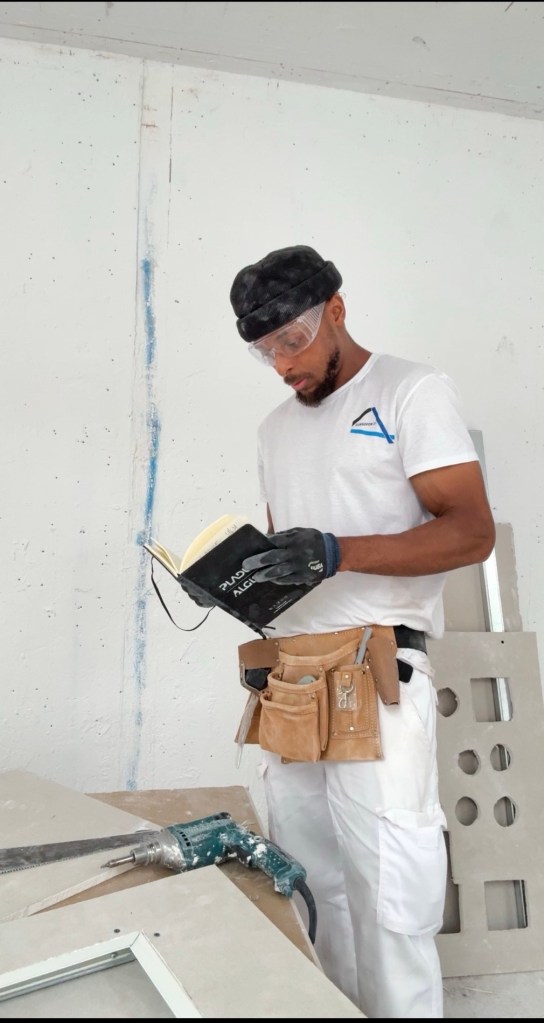
I have been attending this course for about two weeks now, and I have to admit: I love it. It is a technical course related to building and construction.

As I sat there, I found myself thinking about the past. I have wished many times that I had learned a trade, developed a technical skill, or built a business with recognised certification when I was younger. But circumstances limited some of the opportunities available to me.

Now, I am trying to change that.

That wish didn’t come from nowhere. It came from years of working abroad, and from what that experience taught me about its real cost.

Working abroad can offer opportunities that are difficult to find elsewhere. But opportunities do not automatically erase the difficulties that come with living in another country. There are advantages. There are disadvantages. And the experience can be very different depending on your age, profession, legal status, language skills, qualifications and ability to integrate into your new environment.

One of the hardest realities is that sometimes you don’t completely own your time. Your schedule belongs to your employer. Your energy belongs to the job. And after enough years, you can feel less like a person with dreams and more like a machine that wakes up, works, gets paid and starts again.

I am not the only one who feels this way. For many migrants, the pressure behind it is the same. The urgency to earn money can become overwhelming. You arrive in a foreign country and want to establish yourself quickly. You want to send money home. You want to improve your family’s situation. You want people back home to see that you are doing well.

And sometimes, that pressure can lead people into decisions they may later regret. The desire to succeed quickly can make it easy to overlook some of the most important parts of building a life abroad:

Learning the language.
Understanding the system.
Getting proper qualifications.
Going to school or vocational training.
Building professional experience.
Integrating into the society where you live.

These things take time. And when you desperately need money, time can feel like a luxury.

I know that feeling well, because I lived it.


“The real goal isn’t simply to work abroad. It is to build a life abroad.”

For migrants who arrive later in life, starting again can be particularly challenging. You may have years of experience behind you, but if that experience is not recognised in your new country, you may find yourself starting from a completely different position. You may have the ability but not the certificate. You may have the experience but not the language. You may be hardworking but lack the professional network that could help you move forward.

And even when the paperwork and the language do come together, there is a weight that no certificate can lift.

Living abroad can mean maintaining two lives. One life where you work and survive. Another life where your family is waiting for you somewhere else. You work here. You provide there. You worry about the family at home while trying to survive where you are. That double responsibility can take a toll, and sometimes the years pass before you realise just how much of your own life you have spent simply trying to keep everything going.

The younger generation can face a different kind of challenge. The desire to become successful quickly can make education, language learning and proper integration seem less important. But building a sustainable life takes more than earning money today. It requires preparing for tomorrow. That is something I am beginning to understand more deeply.

Seeing this from both sides is what makes me think the conversation needs to change.

Perhaps there is a new way of looking at migration emerging, one based not only on finding immediate work, but on building a profession, gaining qualifications and becoming properly integrated into the society where you live.

At least, that is the direction I am trying to take.

I am currently learning a technical skill through a course that can lead to recognised certification and practical experience. My hope is that it will put me in a stronger position to find better employment and eventually move beyond the manual labour I have done for almost a decade.

The course is possible because I am currently on leave from work, and I am using that time on purpose. I have also been assigned to a proper language course.

For me, this is important. Learning the language isn’t simply about being able to communicate at work. It is about being able to communicate freely. It is about understanding people and the society around you. It is about becoming less dependent on others. It is about integration. And perhaps most importantly, it is about giving yourself more choices.

A few years ago, some of these opportunities were not available to me in the way they are today. Now I am trying to take advantage of them. I don’t know exactly where this new path will lead, but I know I don’t want to spend the next decade doing exactly what I have done for the last one.

Working abroad can be exhausting. It can consume your time. It can separate you from the people you love. It can expose you to difficulties you never expected. But it can also give you an opportunity to rebuild.

And perhaps the real goal isn’t simply to work abroad. It is to build a life abroad.

A life where your work gives you more than a salary.
A life where your skills are recognised.
A life where you can communicate confidently.
A life where you can grow professionally and personally.
A life where you are not simply surviving from one month to another.

I am still on that journey. For now, I am learning. I am studying. I am working. I am trying to integrate. And I am trying to build something better from everything I have experienced.

That morning, with the streetlights going out and the day not yet begun, I wasn’t tired. I was early, and for once that felt like the right direction.

Because working abroad may give you an opportunity. But what you build with that opportunity is ultimately up to you.

I am already in the business.“You Just Haven’t Hired Me Yet.” 

If you could start a new business right now, what would it be?

Sometimes, it begins when you decide to believe in what you can offer—even before anyone else does.

I remembered answering a similar questions in prompt sometimes last year in relation to the side gigs I need so badly. A  common definition of business states that A business is an organization or entity that engages in commercial, industrial, or professional activities to provide goods or services.

However in regard to my financial statues, resources and responsibilities the question of the side gigs and a business I could start right now still lingers at its highest level. 

I am already in the business just that you have not demanded for my service or better say you have not started supporting me yet. 

As a father of two whose does various jobs to sustain my family relying solely on my monthly income from my job has been big problem in the sense that I could barely afford basic needs of my children let alone that of my spouse and myself. 

I took a big step and did a copywriting course last year and had and excellent results of which results you can attest to yourself. I have been writing articles and posting them on social media especially Facebook,  I have my personal Blog the untoldrealities.com where all my works could be seen and also I delve into content creation with then Nam Takenotedad on Facebook and YouTube in the quest to earn a bit extra money to support my family. Yet I must say I have not earned a cent from both platform despite having put an enormous amount of energy and finances. 

But I still believe the future is brighter and continue to put in the work with the belief that one day you will see my work and patronize, promote, assist and collaborate with me. 

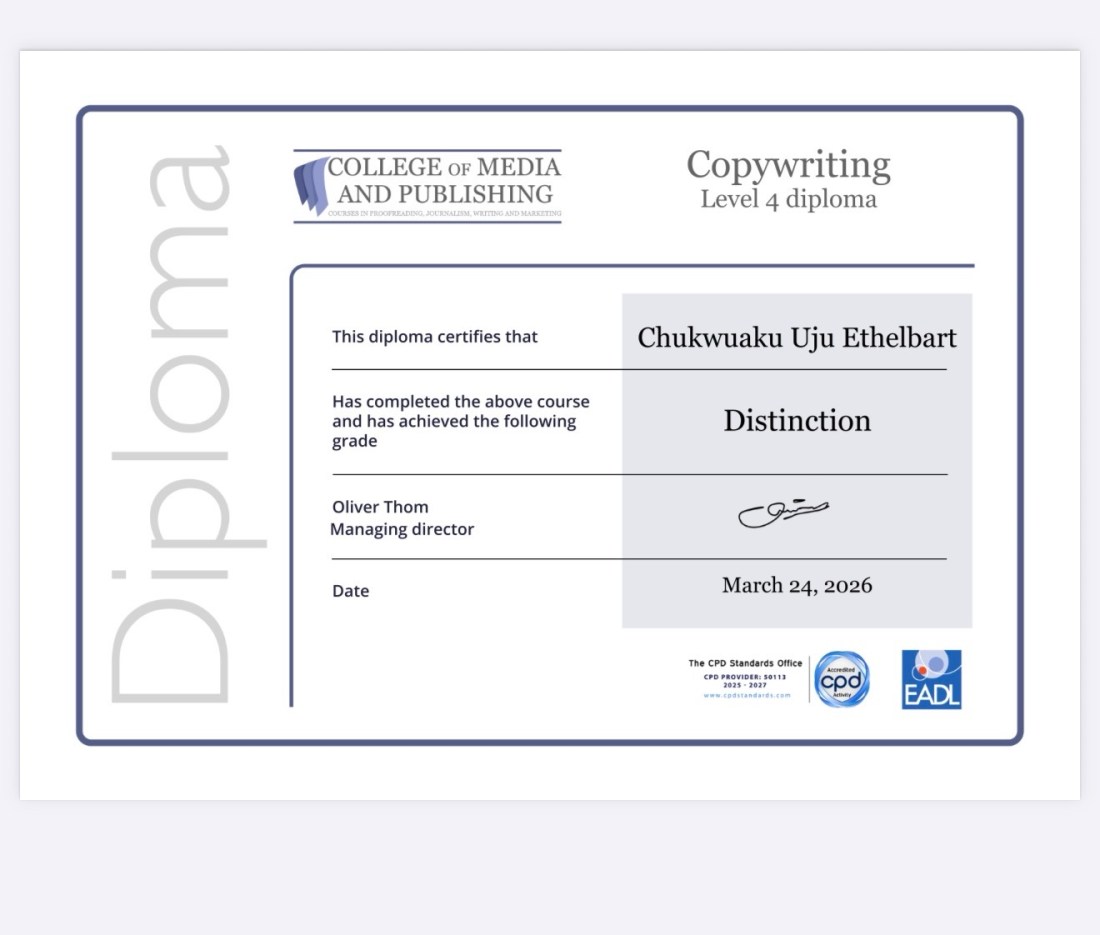
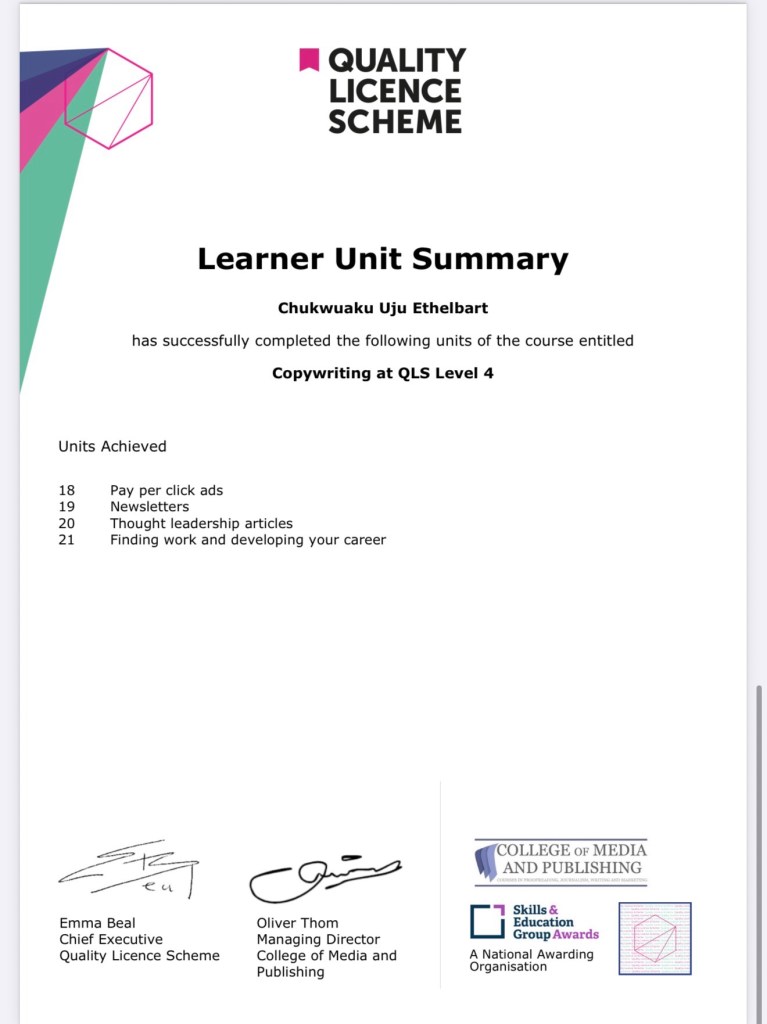
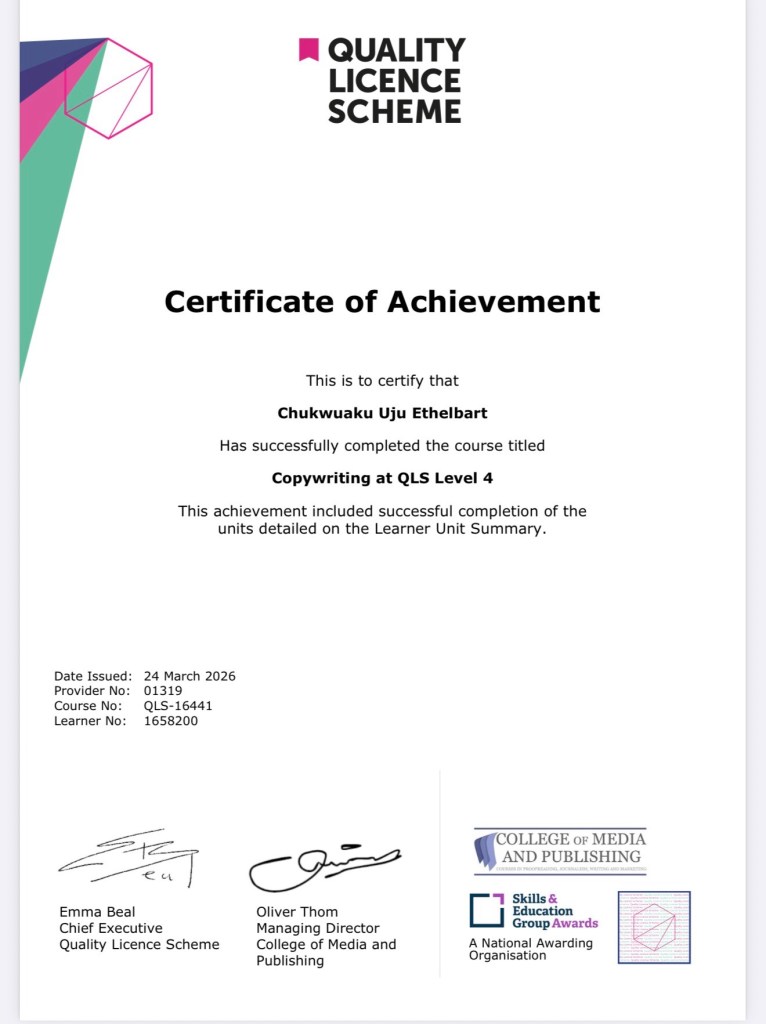
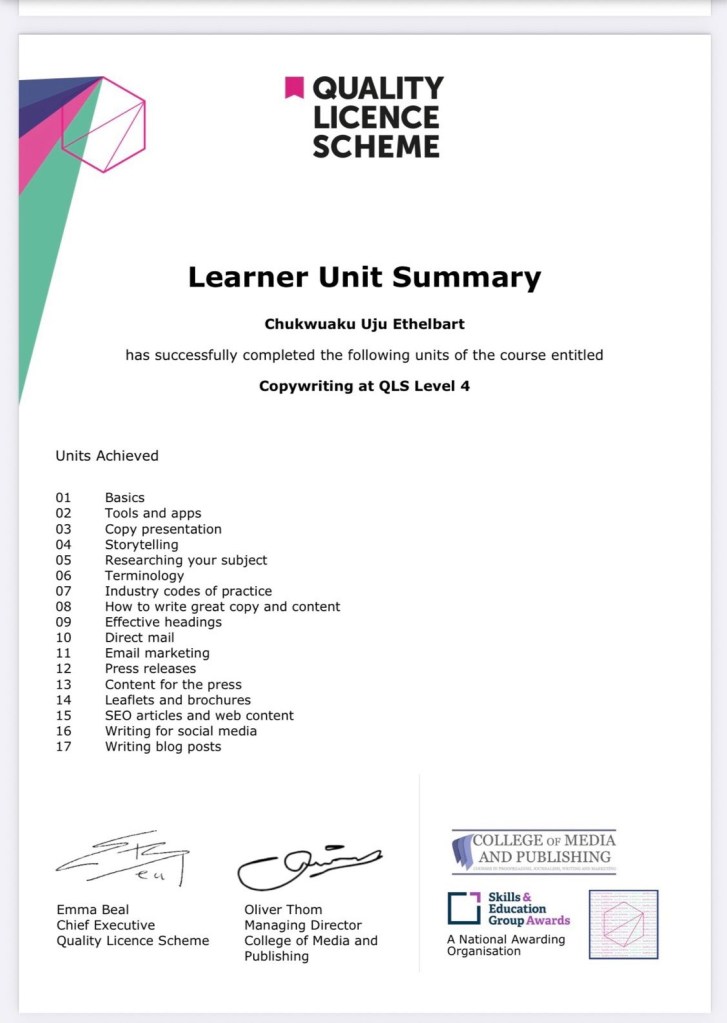
I am certified copywriter from one of the best colleges i(collage od media and publishing United Kingdom ) with remarkable results. I have completed QLS LEVEL 4 with achieved units in

The followings.

Basics

Tools and apps

Copy presentation 

Storytelling 

Research your subject

Terminology 

Industry code of practice 

How to write a great copy and content

Effective heading 

Direct mail 

Email marketing and press release 

Content for press 

Leaflet and brochure 

Seo article and web content

Writing for social media

Blog post.

Newsletter 

Thought leadership articles 

I have not been offered any service yet because I have not publicise my interest since passing through, but I am ever ready to work for you if considered. 

My content creation (Takenotedad) is family oriented with focus on being a good father, love, presence, provision and guidance . Supportive and well-guided children’s upbringing. 

My blog(Untoldrealities.com from which your reading this article also talk about family and everyday realities. 

In conclusion I am already in the business but have not started earning money from it but with your support it’s possible.

——-

If You Could Start a New Business Right Now, What Would It Be?

If you asked me this question last year, I probably would have given you a completely different answer.

I remember answering a similar prompt about the side gigs I needed so badly. A common definition of a business is an organisation or entity engaged in commercial, industrial or professional activities to provide goods or services.

But considering my financial situation, responsibilities and limited resources, the question of what business or side gig I could start right now still remains very relevant.

And my answer might surprise you.

I am already in the business.

You just haven’t demanded my service yet.

Or, perhaps more accurately, you haven’t started supporting my business yet.

As a father of two, I take on different jobs to support my family. Relying solely on a monthly salary has become increasingly difficult because there is always something that needs to be paid for—food, housing, bills, education and the everyday needs of a family.

That is why I decided to invest in myself.

Last year, I took a copywriting course and achieved excellent results. Since then, I have continued writing articles and sharing my work on social media, particularly Facebook.

I also created my personal blog, UntoldRealities.com, where I publish my writing about family, fatherhood, work, relationships and the everyday realities of life.

And I have ventured into content creation through Take Note Dad on Facebook and YouTube, where I share family-oriented content focused on fatherhood, love, presence, provision, guidance and raising children with care.

So far, neither platform has earned me a cent.

But that hasn’t stopped me.

I’ve invested time, energy and money into learning, creating and building these platforms. Sometimes I wonder whether the effort will eventually pay off.

Then I remind myself why I started.

I believe the future can be brighter.

I am a certified copywriter, having completed a QLS Level 4 qualification with the College of Media and Publishing in the United Kingdom.

My training covered areas including:

  • Copywriting basics, tools and applications
  • Copy presentation
  • Storytelling
  • Research
  • Copywriting terminology and industry practice
  • Writing effective copy and content
  • Headlines and effective headings
  • Direct mail
  • Email marketing
  • Press releases
  • Leaflets and brochures
  • SEO articles and web content
  • Social media writing
  • Blog posts
  • Newsletters
  • Thought-leadership articles

I haven’t received many opportunities to offer these services professionally yet, partly because I haven’t done enough to publicly announce that I am available for work.

But I am ready.

If you need someone to write an article, blog post, social media content, email, newsletter, website copy or other forms of written content, I would love the opportunity to work with you.

My other project, Take Note Dad, focuses on something very close to my heart: fatherhood.

I write about being present for your children, providing for them, guiding them, loving them and understanding the things fathers sometimes struggle to say.

My blog, UntoldRealities.com, explores the wider realities of everyday life—the stories people experience but don’t always talk about.

So, if you ask me again:

“If you could start a new business right now, what would it be?”

My answer remains simple:

I wouldn’t start from zero.

I would build on what I have already started.

I already have the skills.

I already have the platforms.

I already have the passion.

I already have the stories.

What I need now is opportunity.

Perhaps one day, you will read my work, recognise what I can do, and decide to hire me, recommend me, collaborate with me or simply share my work with someone who needs it.

Until then, I’ll keep writing.

Because sometimes a business doesn’t begin when you make your first sale.

Sometimes, it begins when you decide to believe in what you can offer—even before anyone else does.

You got these habits for free.

What are your best healthy eating habits?

“ You are what you eat.”

Growing up with a mother who was a food vendor, I believe I developed a good taste for food, cooking and eating. My childhood did not necessarily teach me formal nutrition or a particular diet, especially considering my parents’ economic circumstances, but it certainly gave me a foundation.

My mother’s food business was mostly built around starchy foods and proteins. Like many Nigerian families, we grew up eating rice, beans, plantain, yam, soups and pounded yam.

As children, we ate freshly prepared food, and hunger was rarely a major concern because there was usually something available before or after school. I also remember my father preparing medicinal herbs for us to drink. I honestly don’t know everything that went into those mixtures, but they were part of our childhood.

Perhaps that background explains my long-standing relationship with rice.

I still enjoy rice, although certainly not as much as I did when I was younger.

🥰favourite
😋😍My favourite

A habit is simply a pattern of behaviour repeated frequently, sometimes until it becomes almost subconscious. As I have grown older, I have developed a few personal rituals around food, exercise, reading and thinking—although, honestly, keeping up with the last one can be challenging.

There is an old saying: “You are what you eat.”

I don’t know if it is literally true, but I do believe what we regularly eat matters.

I am quite particular about my food. Some people may mistake that for pride, but I don’t really see it that way. I simply know what I like.

I love grains and nuts. Muesli, sunflower seeds, almonds, groundnuts, cashews, carrots and milk are some of my favourites. Anyone who knows me well can probably confirm this.

I normally have some combination of these foods several times a week.

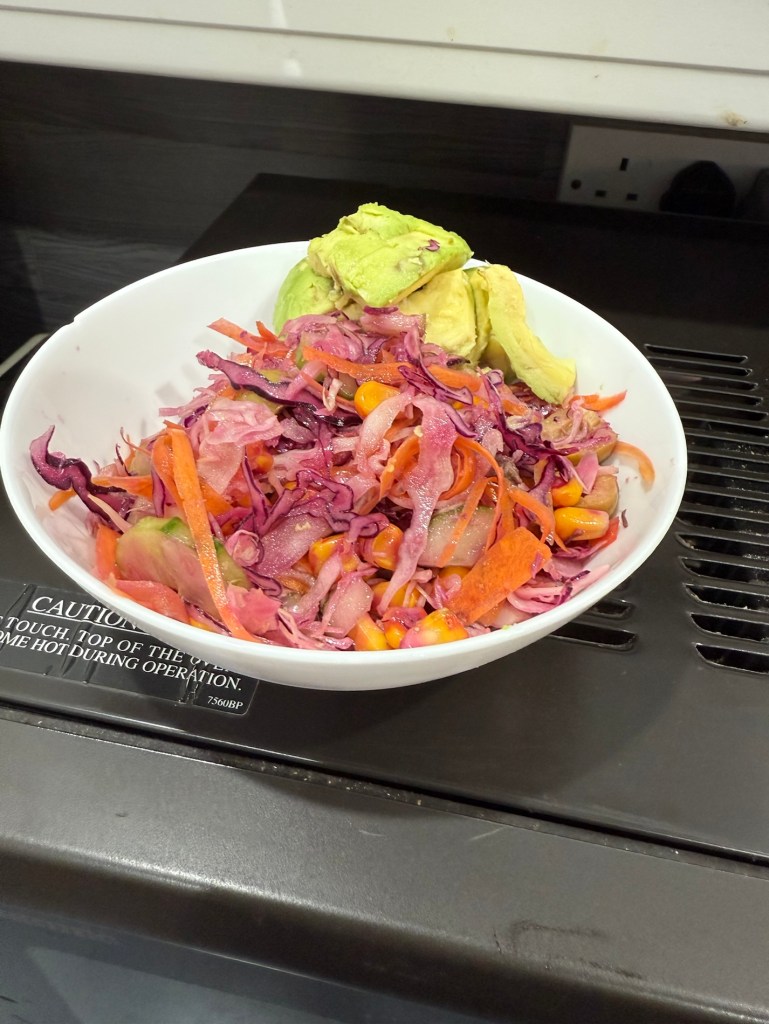
Then there is my salad.

I have my own way of preparing it, and I call it my “special salad.” My children love it too.

I combine finely sliced white and red cabbage with cucumber, carrots, sweet corn, olives and sardine or mackerel fillets in olive oil. Sometimes I add avocado and almond seeds.

Honestly, you don’t want to miss it.

Over time, I have developed these eating habits and paid attention to how different foods make me feel. For me, the attraction isn’t only the taste. I also enjoy knowing that I’m eating a variety of foods that provide nutrients, protein, fibre, healthy fats, vitamins and minerals.

And there is something else I love about these meals:

They are simple.

They don’t require hours in the kitchen. Depending on the meal, I can have them in the morning, afternoon or evening, including around my exercise routine.

I’ve been away from my family for a while, and one of the things my daughter keeps reminding me about is how much she misses my salad and some of the other food I prepare.

Sometimes, food is more than food.

It becomes a memory.

It becomes home.

It becomes something your children remember about you.

When it comes to drinks, I also have a few homemade combinations I enjoy. I sometimes prepare a mixture using ingredients such as ginger, garlic, lime, cloves and cinnamon, usually by boiling them together and storing the mixture.

I don’t consider it a miracle drink, and I wouldn’t tell anyone that it can cure illness. For me, it’s simply something I enjoy as part of my personal routine.

I also avoid sugary soft drinks most of the time and rarely drink alcohol.

I do, however, smoke socially—a habit I have been trying so hard to quit of which my last puff was nine months ago. I know isn’t exactly something I should put on my list of healthy choices.

So, these are some of my eating and drinking habits.

They aren’t a perfect diet, and they aren’t rules everyone should follow. They are simply habits I’ve developed from my upbringing, my experiences and what I have personally come to enjoy.

And yes, I am writing all of this after just finishing a plate of rice.

You got these habits for free.

You’re welcome.

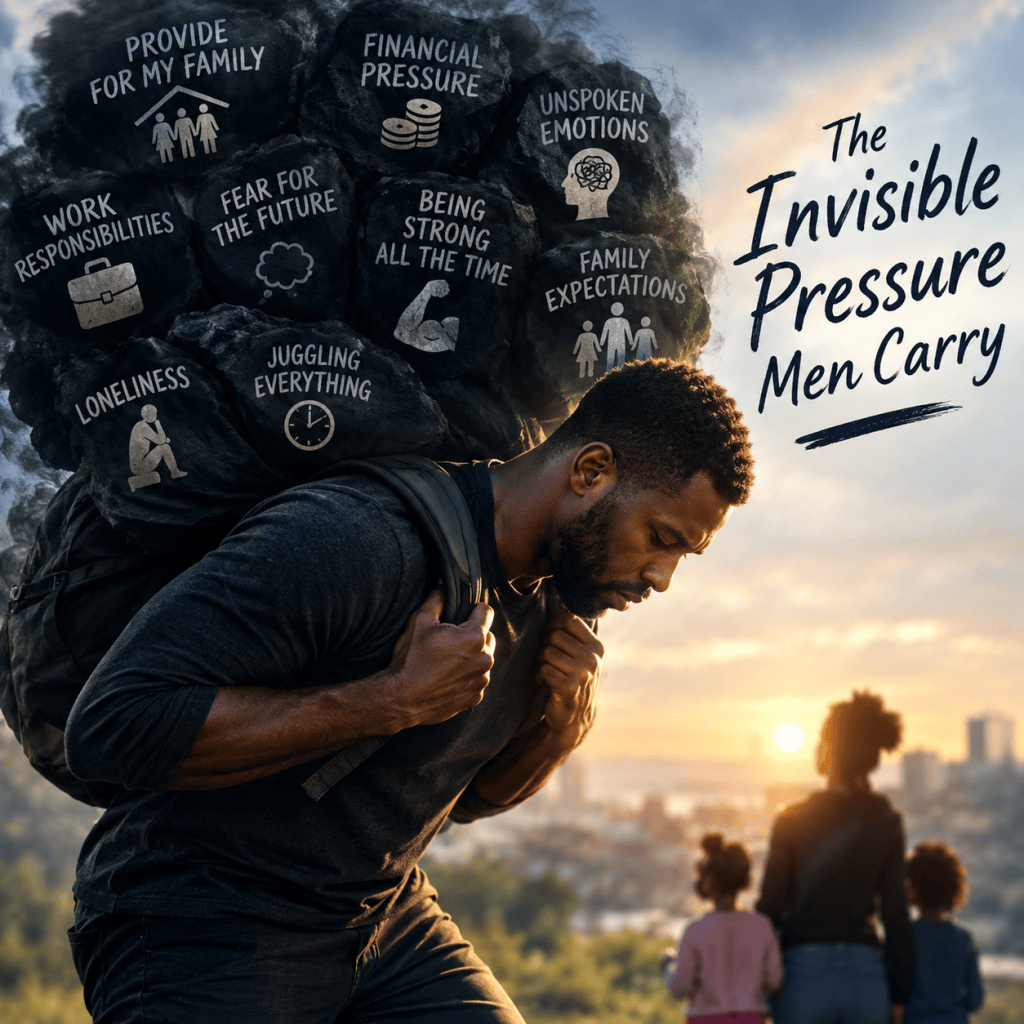
The Invisible Pressure Men Carry

!if you are that man,

When I was a child, the only thing I really worried about was being hungry. Even then, I expected my parents to feed me, whether or not they had eaten themselves. Growing up was enjoyable, but nothing was completely free. There were always small tasks to complete and expectations to meet, and even as children we were expected to contribute in whatever little ways we could. Perhaps that is how life begins teaching us about responsibility.

Everyone experiences pressure at different stages of life. But as I grew older, I began to understand the particular pressure that comes with becoming a man, a husband and a father. Growing up is enjoyable until the obligations begin to pile up. At first, you are responsible mainly for yourself. Then things change. You are expected to leave home at a certain age, find work, build a career or start a business, get married, have children, provide for them and protect them. And somehow you must keep everything together even when you are barely managing to keep yourself together.

Sometimes it becomes difficult to enjoy your own achievements, because society keeps moving the goalpost. You achieve one thing, and immediately there is something else to accomplish. You are working, but expected to earn more. You are married, but expected to provide more. You have children, but expected to give them more. And when you cannot, you begin to question yourself.

I grew up with many siblings. My parents worked hard to put food on the table. My father left home early in the morning and often returned late at night. My mother wasn’t always smiling. With so many mouths to feed, clothes to buy, school fees to find and children to care for, there was always something waiting. My mother was strong and supportive, and my father was extremely hardworking, yet there were times when my school fees and those of my siblings had to be borrowed. Sometimes I overheard my parents arguing, usually about money and basic needs at home.

If you’re that man!

As a child, I couldn’t understand why. I assumed their difficulties were the result of poor planning or too many children. But life has taught me otherwise. Today I see families with fewer children, living in major cities and developed countries, facing serious financial difficulty. Sometimes the problem isn’t how many people are in the family. Sometimes life is simply expensive, and the income coming in isn’t enough for the responsibilities going out.

As a man, there can be an expectation that you will solve whatever problem appears in your family. You have a job, but your salary barely covers the rent. Then come food, electricity, transport, school expenses and household needs. Your wife may want a gift. Your children may want treats, outings or a holiday. None of these requests is unreasonable; they are normal things families want. But sometimes circumstances make even ordinary things feel impossible.

I remember my daughter asking repeatedly about going on holiday during the long school break. Eventually, I found the right words to make her stop asking. What she didn’t understand was that, in some ways, I needed that holiday more than she did. I needed the break. I needed to see my family happy. I needed to experience something that wasn’t another bill, another shift or another responsibility. It breaks my heart to think that circumstances made it impossible.

The worst part isn’t that the things my children want are expensive. It is knowing that our circumstances can make even simple experiences difficult, and that creates pressure. I want my wife and children to be happy. But before anything else, I want to build a consistent, reliable source of income beyond what I earn each month. I want stability. I want breathing space. I want to be able to say yes sometimes without immediately calculating what it will cost us tomorrow.

No one understands this pressure quite like a parent who wants the best for their children, works hard every day, and still can’t afford everything they wish they could provide. When every penny has to be weighed, it isn’t necessarily because you are stingy. Sometimes you are simply aware that one careless decision can affect the entire family. Yet from the outside, you can easily be misunderstood, called stingy, uncaring or selfish.

Nobody sees the calculations happening inside your head, the quiet question of “If I spend this today, what happens tomorrow?” Nobody sees the things you give up, the dreams you postpone, or the nights you lie awake trying to make everything work. And slowly, the pressure begins to show. Your smile becomes less frequent. You look older than your age. Sleep becomes difficult, your energy fades, and your health can begin to suffer. One day you look back and realise you have spent so much time trying to provide a better life for your family that you forgot to live some of your own.

Now I understand my father. I understand why he didn’t always come home early from work, why my mother’s smiles were so seldom seen, and what lay behind the arguments I overheard as a child. Behind those moments were two parents trying to make something work. They didn’t have all the answers. They simply kept trying.

And now I find myself doing something similar. Different country, different circumstances, different generation, but some pressures remain remarkably familiar. Perhaps that is one of the hidden realities of being a man and a father: the very responsibility that gives your life meaning can also become a source of enormous pressure. You want to provide, to protect, to keep your family happy, to be strong. But you are human too. You get tired. You worry. You struggle. You have dreams of your own. Sometimes you need help. And perhaps men need to be reminded that admitting this does not make them weak. It makes them human.

The invisible pressure men carry is real. You may not see it on someone’s face or hear it in his voice. You may simply see a man going to work every morning and coming home every evening. But behind that routine could be a thousand calculations, sacrifices and worries that nobody knows about. So the next time you meet a man who seems unusually quiet, don’t assume he doesn’t care. He may simply be carrying something you cannot see.

And if you are that man, remember this: your family needs your presence, not just your provision. Work hard. Provide when you can. Build for the future. But don’t forget to take care of the person carrying all that responsibility.  You.!

Maybe Karma Isn’t What We Think It Is”

Do you believe in karma?

What If Karma Isn’t About Revenge?

It is important to understand that karma is not necessarily a cosmic judge or an instant punishment system that appears whenever someone does something wrong.

For as long as I can remember, I have considered myself a student of the idea of karma, even though I did not always understand its deeper meaning. For a long time, I simply associated karma with punishment for wrongdoing.

It is normal to believe in something. Beliefs can empower us, guide our conscience, and give us something to aspire to. But belief alone is rarely enough.

For example, if you believe you will become wealthy, you cannot simply pray for wealth and wait for it to arrive. You have to put that belief into practice by participating in activities that can create wealth.Yet even when two people follow similar paths, they may experience completely different outcomes.

And still, I believe in karma.

Look around us. With the level of aggression, wickedness and violence we witness in the world, some people argue that karma is overrated. They ask: Where is the punishment? Why do people who hurt others sometimes seem to live perfectly comfortable lives?

They have a point.

It is rare to witness someone who wronged you receive an exact or proportional punishment for their actions.Sometimes, people hurt others and appear to get away with it.

But perhaps this is where our understanding of karma needs to change.

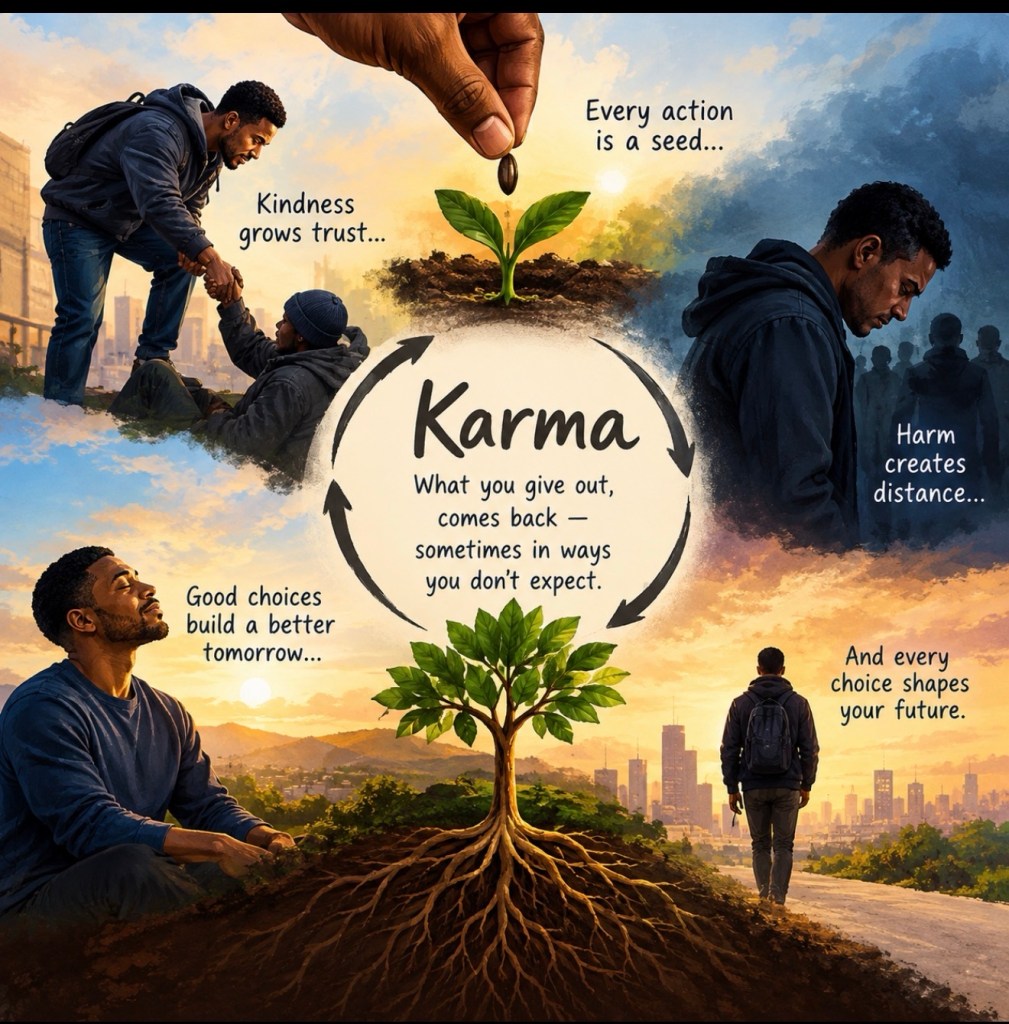
Karma, in many traditions, is understood as a principle of cause and effect. An intentional action can set off a chain of consequences, much like planting a seed creates the possibility of a particular plant growing.

But even that analogy has limitations.

Not every seed grows.

Some are planted but never receive enough water. Some are destroyed by the weather. Others grow differently from what we expected.

They grow slowly.They become part of us.!

The older I become, the more I understand that the meaning of karma can differ from one person to another, depending on their beliefs, experiences and circumstances.

And perhaps karma is not only about what we do physically but also how  we  think and our choice of words.

Our thoughts influence our words. Our words influence our actions. Our actions become habits, and our habits gradually shape the lives we live.

In that sense, perhaps karma isn’t always about someone else being punished.

Sometimes, the consequence is simply becoming the person our choices have created.

If you constantly choose anger, you may build a life surrounded by conflict. If you choose kindness, you may build relationships rooted in trust.If you repeatedly deceive people, you may eventually find yourself surrounded by people who no longer trust you.

These consequences may not arrive dramatically. There may be no lightning from the sky, no mysterious punishment, and no moment when the universe announces that justice has been served.

Sometimes, consequences are much quieter.

They grow slowly.They become part of us.

So, do I believe in karma?

Yes, I do.

But I no longer believe karma works according to my assumptions or according to the punishment I think someone deserves for offending me.

I believe that our choices have consequences—sometimes directly, sometimes indirectly, sometimes immediately, and sometimes years later. We may never see every consequence or  know what happened to the person who hurt us,

And perhaps we don’t need to.

Because life has a way of teaching us that what we repeatedly put into the world can eventually shape the world we live in.

We may not always receive exactly what we give, but we rarely remain completely untouched by what we repeatedly choose to give.

A Late-Night Answer to a Simple Question.

How do you write what people actually want to read?

People Haven’t Stopped Reading. They’ve Become Selective.

It is late, and I desperately need to rest. But it has been a while since I responded to one of those writing prompts, so tonight, I decided to give it a try. The question is simple:

How do I actually write what people want to read?

Writing is something we learn, but great writing often comes from something deeper—passion. Becoming a good writer requires skill, practice, patience, observation, and, above all, deep thinking.

A good writer captures your mind, creates curiosity, and holds you until the end. Sometimes, you think you already know where the story is going, yet the writer leaves just enough uncertainty to make you keep reading.

That, to me, is the beauty of writing.

But how do you write something people actually want to read?

It is easy to argue that people no longer read as much as they used to. We live in the age of social media, short videos, notifications, and portable screens. People scroll through content constantly, often giving only a few seconds to whatever appears in front of them.

But I don’t think people have stopped wanting stories.I think they have simply become more selective about which stories deserve their attention.

I have been writing for a long time. I remember keeping records of my activities and thoughts in a diary when I was in my early secondary school years. I even wrote my first book in a notebook.

Unfortunately, many of my early writings are gone. Some were lost to floods, some to fire, and others simply disappeared because I didn’t have the means to store them properly.

Still, the desire to write survived.

I studied literature and read books by some of the world’s greatest writers, including Chinua Achebe and William Shakespeare, among many others. I have continued reading contemporary writers and discovering new voices.


Still, the desire to write survived.

Literature teaches you that words are more than words. You learn about irony, hyperbole, oxymoron, sarcasm, symbolism, suspense and countless other ways of making language more powerful.But beautiful language alone does not make people read.

People read because something in the writing speaks to them.

Sometimes it is a question they have been afraid to ask. Sometimes it is an experience they have lived but never found the words to describe.

Sometimes it is simply curiosity and sometimes, they see a little bit of themselves in your story.

Perhaps that is the answer I have been looking for.

Writing requires deep thinking, narrative skill and precision. But it also requires understanding your audience, your message and the story you are trying to tell.

You don’t always have to write what people think they want to read.

Sometimes, you simply have to tell the truth in a way that makes them want to keep reading.

I don’t know if you still have an interest in this article but if you’ve made it this far, I guess I’ve already captured your attention.

And isn’t that the beauty of writing?

We are all narratives in progress and our stories are still being written.

Maybe writing shouldn’t be about constantly projecting what people might want. Maybe it should be about understanding the story, knowing the audience, finding the message—and then telling it honestly.

Perhaps that’s how I continue to write things that people like you still want to read.

Thank you for always reading,liking, commenting and encouraging me to keep writing.

It is past 11 p.m. now. I’ve completed my tasks for the day, and I’m off to rest. I have an early morning class and another tight schedule tomorrow—and for the rest of the week.

But tonight, at least, I wrote.

And perhaps that’s enough until the next one.

The salary that disappears!

Why your mind isn’t with you.

We’re only a few days into the new month, and work has been extremely busy recently.

There is barely enough time for anything else. Simply focus on the task at hand and complete it.

We had already been told to prepare for extra shifts, and holidays were temporarily restricted.

Then payday arrived, and you could see the difference right away.

Most of my coworkers walked around with their shoulders high, looking happy and ready to tackle whatever came next.

All of us had been paid for the previous month’s work. The salaries seemed to give new life to the tired faces I had seen during the third week of the month. Everyone started smiling again. They appeared to have won the lottery, and I understood why.

Yes, money is blood.

It gives people energy, choices, and something to look forward to. But something strange occurred to me.

“How are you doing, Uju?”

“Is everything okay?”

I was asked the same question for the third time that day, and I had no idea why.

I kept answering the same way.

“Good.” “Yes, I am fine.”

Until the final person asked.

During our break, I approached him and we sat down at the same table. Because we seemed so close, I decided to ask him directly.

“You have asked me several times today if everything is okay. Why?” His response sent me straight to the restroom.

He said:

why your mind was not with you.

“Your face does not appear happy. You appear sad. You aren’t laughing or smiling. And you rarely talk to your coworkers, even when they speak to you.”

Really?

I hadn’t noticed it myself; I assumed I was responding normally to everyone.

I quickly apologized and assured him that everything was fine. “It’s just that my thoughts are somewhere else.”

“I understand,” he replied. “Take it easy, brother.”

After my meal, I went straight to the bathroom and stared at myself in the mirror for quite some time.

And I realized something I’d never considered before:

I had no idea the journey of my mind was written on my face.

People could see what I was carrying, even though I hadn’t told them.

Most of my coworkers were single. Those who were married frequently worked alongside their spouses. My situation was different. I have a family that relies on me, and this alters the meaning of a salary.

For many people, payday can bring relief.

For me, payday can sometimes mean watching money disappear before it reaches my hands.

Bills are waiting.

Food is waiting.

Responsibility is waiting.

And before I even receive my salary, the majority of it has already been spent, and I’ve been doing this for years.

I work and wait for payday. Receive your salary.

Pay what you owe and then restart.

There’s something painful about working your muscles day after day, week after week, month after month, only to end up with almost nothing left over.

Sometimes it’s not enough to buy yourself a small item. Sometimes it’s not enough to buy your kids a simple treat.

You can see the joy on your coworkers’ faces when they get paid. You want to feel the same way.

You want to feel renewed. You want your salary to provide you with the motivation to continue.

But what happens when the salary that is supposed to revitalize you turns into another reminder of how much you still owe?

That salary, which appeared to energize everyone around me, had the opposite effect on me. It became the reason my mind was elsewhere. The reason why my smile vanished. Why did someone look at me and ask

“Uju, are you alright?”

Yes.

I was working, earning, and receiving pay. But mentally, I was somewhere else, because sometimes the most difficult part is not working hard.

It is hard work knowing that the money you are working for has already vanished.

Perhaps this is one of the realities that people fail to see.

They see the job, the salary, and you coming in every morning, but they don’t see the bills waiting at home. They don’t see the responsibilities that come with each euro, or how quickly the money disappears.

And they don’t see the exhaustion of starting another month knowing you’ll have to do it all over again.

The salary arrived.

But before I could sense its arrival,

It had already vanished.